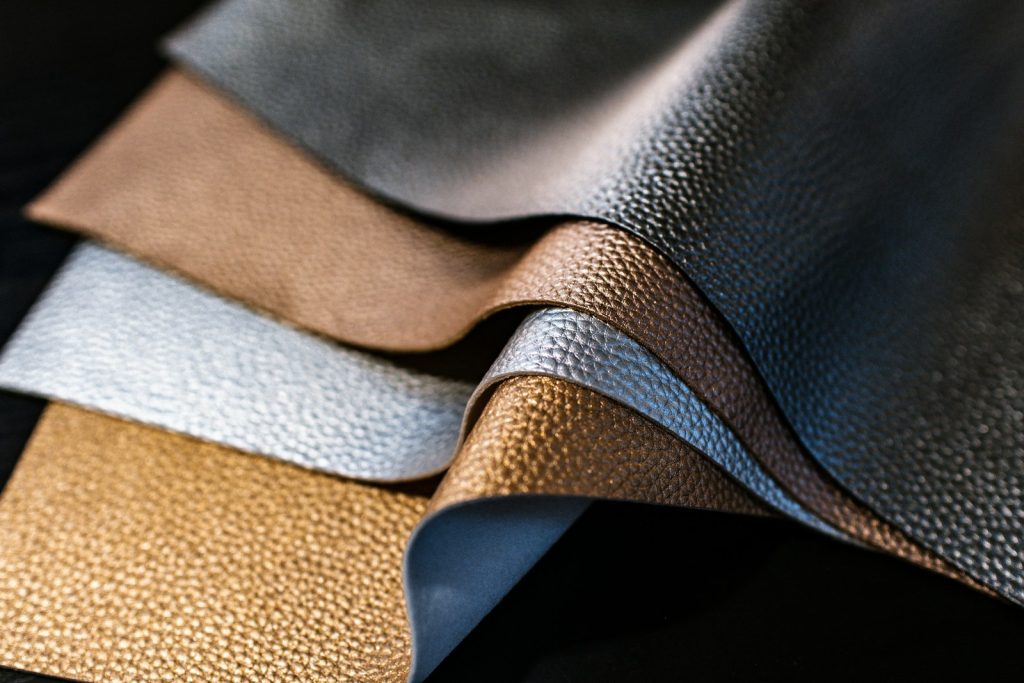
Honest sourcing note: We name every species accurately — saltwater crocodile (Crocodylus porosus), Nile crocodile (C. niloticus), American alligator (Alligator mississippiensis), caiman, reticulated python, monitor/ring lizard, ostrich and stingray — and never sell embossed calf as “exotic”. Most exotic leather is CITES-regulated (commonly Appendix II); legal cross-border trade needs export/import permits and source codes, and buyers are responsible for their country’s rules — this is general information, not legal advice; verify with your CITES Management Authority and customs broker. Prices, MOQ and lead times are indicative ranges (2025–2026), by quote. Luxury houses are referenced only as neutral examples — no affiliation. We are a B2B sourcing desk, not a tannery: we coordinate vetted, CITES-compliant suppliers.
The most expensive exotic leather is not a single species, but a narrow band of top-grade, large-size crocodilian skins and a few very rare specialties. In trade practice, the “most expensive exotic leather” at scale is usually Grade I saltwater crocodile (Crocodylus porosus) belly, wide and long, fully finished by a tier‑one tannery.
Below, I’ll rank the priciest exotic skin types used in leather goods, explain why they reach those levels, and give realistic wholesale ranges (by quote, last verified June 2026) so you can benchmark your own sourcing.
—
## What does “most expensive exotic leather” actually mean?
In B2B sourcing, price is driven by a combination of:
– Species (and CITES Appendix)
– Size (belly width / length)
– Cut (belly‑cut vs back‑cut)
– Grade (I–IV, defect position and size)
– Finish and tannery level
– Origin and CITES source code (W, C, F, R, D)
– Order volume, colour, and payment terms
So “which exotic leather costs most” is really: *Which species + size + grade + origin + finish, in commercially repeatable quantities, reaches the highest per‑skin or per‑square‑meter cost?*
One‑off curios (e.g. albino python, archival stingray, fossilised fish) can technically be more expensive, but they are not realistic supply chains for brands or workshops. This ranking focuses on repeatable, CITES‑compliant trade flows that we can actually source.
—
## Ranked: The priciest exotic leathers in real‑world trade
### 1. Saltwater crocodile (Crocodylus porosus) – top‑end belly
Crocodylus porosus (“poro”) from established farms is the benchmark priciest exotic skin used at scale in leather goods. This is the classic ultra‑fine navel‑center belly used in small leather goods and haute horlogerie straps.
Key drivers of cost
– CITES Appendix I or II depending on population, almost always farmed (C, F) or ranch (R) for export.
– Long farming cycle; low defect tolerance at Grade I.
– High rejection rates for top luxury‑house specs: clean center belly, symmetric tiles, tight navel, minimal bites or scars.
– Limited supply of large, very clean skins.
Typical specs for “most expensive” poro
– Cut: Belly‑cut
– Belly width: 38–46 cm for straps and SLPs; 46–60+ cm for handbags
– Length: 120–160+ cm (measured nose‑to‑tail vent, but pricing negotiated mainly on belly width)
– Grade: I (sometimes “Selection” above I for luxury allocations)
Indicative wholesale (by quote, last verified June 2026)
Fleshed, fully finished, crust or aniline/semianiline, large lots, tier‑one Southeast Asian tannery:
– Grade I, 38–46 cm: ~US$450–800 per skin
– Grade I, 46–60+ cm: ~US$800–1,400+ per skin
(Exceptional widths and special finishes can exceed this band.)
Lower grades (II–III) or narrower skins drop significantly, but the very top of the market is still porosus Grade I belly, large size.
—
### 2. Nile crocodile (Crocodylus niloticus) – large, premium farmed belly
Crocodylus niloticus (“nilo”) is more widely farmed than porosus and generally a little less expensive, but still sits near the top of any “most expensive exotic leather” ranking.
Drivers
– CITES Appendix I/II by country; commonly farmed/ranch (C/R) for export.
– Larger average size than porosus; scales a bit coarser.
– Strong demand for handbags and belts, with some price pressure from fashion cycles.
Typical premium specs
– Cut: Belly‑cut
– Belly width: 40–55 cm (SLGs and straps) up to 65+ cm (handbags)
– Grade: I
– Origin: Africa, Madagascar, some Asian tanneries finishing African wet blue.
Indicative wholesale (by quote, June 2026)
– Grade I, 40–50 cm: ~US$280–500 per skin
– Grade I, 50–65+ cm: ~US$500–900 per skin
Exceptional, highly selected “luxury house” lots can narrow the gap with porosus, especially on wide, flawless bellies.
—
### 3. American alligator (Alligator mississippiensis) – premium selected grades
Alligator mississippiensis is a North American crocodilian with its own long‑established trade and grading systems. At the top end, selected belly skins can rival or exceed some Nile crocodile prices.
Drivers
– CITES Appendix II; typically wild (W) or farmed (C/F), depending on state and program.
– Strong domestic US demand; limited export bandwidth from certain programs.
– Fine scale pattern, especially sought for watch straps and SLPs.
Typical high‑end specs
– Cut: Belly‑cut
– Belly width: 32–40 cm (straps/SLGs), 40–60+ cm (bags)
– Grade: I or “Premium/Select” equivalent
– Finish: Aniline/semianiline, classic glazed.
Indicative wholesale (by quote, June 2026)
– Grade I, 32–40 cm: ~US$300–550 per skin
– Grade I, 40–60+ cm: ~US$550–1,000 per skin
(Rare, very wide, clean skins toward the upper end.)
Because alligator sourcing is more regional, FOB points and local auction prices influence the final numbers heavily.
—
### 4. High‑grade ostrich (Struthio camelus) – big panels with dense quill
Ostrich is often misunderstood. On a per‑square‑meter basis, premium ostrich crust from top tanneries can be surprisingly expensive, though per skin it’s lower than porosus or niloticus.
Drivers
– CITES: Not listed. Trade is regulated like other livestock leathers.
– Farming is intensive but efficient; yields large panels.
– High wastage from cutting around quill pattern and defects for luxury goods.
Typical premium specs
– Panel size: 1.2–1.5+ m² of usable quill area for a prime crown.
– Grade: I (dense, even quill, minimal growth marks).
– Finish: Crust, aniline, or fashion finishes.
Indicative wholesale (by quote, June 2026)
– Grade I crust: ~US$90–140 per skin
Typically equivalent to ~US$70–110 per m² of good quill area, depending on cut strategy.
Ostrich becomes expensive in practice because a single bag may consume 1.5–2.5 skins to find perfectly matching quill composition and colour, especially for neutral luxury colours.
—
### 5. Ring lizard (Varanus salvator and related spp.) – narrow but high value per m²
“Ring lizard” in trade generally refers to small varanid (monitor) lizard species such as Varanus salvator and related taxa, pit‑tanned and finished for watch straps and small leather goods.
Drivers
– CITES Appendix II for many species (e.g. Varanus salvator).
– Small surface area; most of the value is in the central flank pattern.
– Labour‑intensive tanning; often old‑school pit or drum methods.
Typical specs
– Cut: Back‑cut for strap panels; sometimes belly‑cut for wallets.
– Skin length: Often 60–90 cm; width 10–18 cm of usable central pattern.
– Grade: I (no holes or major scars in the central band).
Indicative wholesale (by quote, June 2026)
– Grade I finished skins: commonly ~US$25–60 per skin, but that translates to high cost per usable m², because each skin yields only a few strap sets.
When calculated per square meter of “ideal” watchstrap panel, ring lizard sits higher than many people expect, sometimes overlapping lower grades of crocodilian on a m² basis.
—
### 6. Python (Python reticulatus, Python bivittatus) – special finishes and wide, flawless backs
Standard‑grade python is not in the same price tier as porosus or nile. However, large, clean back‑cut skins with complex finishing (multi‑stage prints, washes, metallics) can edge into surprisingly high prices.
Common commercial species:
– Python reticulatus – Reticulated python (CITES Appendix II)
– Python bivittatus – Burmese python (CITES Appendix II)
Drivers
– CITES Appendix II with a combination of wild (W), ranched (R) and farmed (C).
– Back‑cut skins with full, uninterrupted pattern for boots and bags.
– High fashion‑finish complexity: multiple passes, laser, foil, hand antiquing.
Typical specs
– Cut: Back‑cut for boots/bags; belly‑cut for SLGs and ready‑to‑wear inserts.
– Length: 3–5+ meters, often sold by cm or by skin.
– Grade: I (continuous, defect‑free central pattern).
Indicative wholesale (by quote, June 2026)
– Grade I, basic fashion finishes: around US$40–90 per skin (retic, 3–4 m).
– Premium complex finishes on long, wide skins can reach ~US$90–150+ per skin.
On a per‑m² basis, even the best python still usually prices below top crocodilian, but finishing cost can narrow the gap.
—
## Ranking by approximate price tier
To summarise where each sits on average, ignoring edge cases and one‑off curios:
| Rank | Species (scientific) | Typical “top‑end” use | High‑grade price band (by quote, June 2026) |
|---|---|---|---|
| 1 | Crocodylus porosus (saltwater crocodile) | Haute SLPs, watch straps, bags | ~US$450–1,400+ per Grade I belly skin |
| 2 | Crocodylus niloticus (Nile crocodile) | Handbags, belts, SLPs | ~US$280–900 per Grade I belly skin |
| 3 | Alligator mississippiensis (American alligator) | Straps, SLPs, bags | ~US$300–1,000 per Grade I belly skin |
| 4 | Struthio camelus (ostrich) | Bags, SLPs, footwear | ~US$90–140 per Grade I skin |
| 5 | Varanus salvator group (ring lizard) | Watch straps, SLP inlays | ~US$25–60 per Grade I skin |
| 6 | Python reticulatus, P. bivittatus | Bags, boots, RTW trims | ~US$40–150+ per Grade I skin |
All price bands above are indicative, wholesale, by quote, last verified June 2026, and depend on size, grade, finish, origin, MOQs, Incoterms and payment terms. Exact current numbers should always be confirmed at RFQ stage.
—
## Why porosus belly usually wins “which exotic leather costs most”
If you look strictly at per‑skin cost in workable volumes (50–500+ skins per colour/size), porosus belly is the usual winner. Reasons:
1. Yield of perfect center belly
– The most valuable area is the symmetric rectangular belly tile field.
– Any defect across the navel or central rows drops the grade sharply.
2. Farm cycle and mortality
– Porosus grow relatively slowly; feed and infrastructure costs stack up over multiple years.
– Farm risk (disease, flooding, regulation) adds a premium.
3. CITES and quota
– Depending on origin, quotas tightly limit volumes eligible for export, especially for certain source codes.
– Compliance overhead (farm registration, tagging, CITES permits) is non‑trivial.
4. Consistency demanded by luxury buyers
– Leading luxury houses (as neutral examples: Hermès, Louis Vuitton, Chanel) set extremely tight spec windows on belly width, defect size, and position.
– Farms and tanneries invest heavily to meet those specs, and only a portion of production qualifies.
All of this means that Grade I, wide porosus belly is a small slice of global crocodilian output—and that slice drives the top of the price curve.
—
## Why “Grade I vs Grade II” matters as much as species
A mistake I see often: comparing a Grade I porosus price to a Grade III Nile or mixed‑grade alligator, then drawing conclusions about which is “cheaper”.
Real comparisons must align:
– Species (porosus vs niloticus vs alligator)
– Cut (belly‑cut vs back‑cut vs side)
– Size class (e.g. 38–42 cm vs 46–50 cm belly)
– Grade definition (what does each tannery call I, II, III, IV?)
– Finish (simple crust vs deep fashion finish)
Quick mental guide:
– Grade I to II drop on crocodilian: often 30–50% down per skin.
– Grade II to III: another 20–40% down, depending on defect location.
For a bag brand, Grade II porosus or nile can be the sweet spot:
Visible area is clean after cutting, price is significantly lower than Grade I, and the defects live in off‑cut sections.
If you want us to model your cutting yield vs grade and cost, you can plan your trip with our team via email or WhatsApp and we’ll walk through belly width, pattern placement and grade trade‑offs for your product line.
—
## Belly‑cut vs back‑cut: cost per usable panel
The most expensive exotic leather for your project is the one with the highest cost per clean, usable panel, not necessarily the highest price per skin.
– Belly‑cut crocodile/alligator
– Best for SLPs, straps, center panels on bags.
– Expensive per skin, but efficient for these patterns.
– Back‑cut python
– Cheaper per skin than porosus, but for tall boots you may waste a lot of narrow tail or neck.
– If you only need small inserts, back‑cut python can be more cost efficient than it looks.
– Ostrich panels
– Large physical skin, but a “bag‑grade” quill layout is centred on a crown region.
– If your design insists on dense, even quill across all visible faces, real usage is 1.5–2.5 skins per bag.
For each product category, we normally run:
1. Pattern mapping on the grade map (I–IV defect zones)
2. Yield calculation (how many units per skin at each grade)
3. Effective material cost per finished piece
Only after this do we talk about “which exotic leather costs most” *for your design*, not in abstract.
—
## CITES, legality and what “expensive” includes
Many of the species listed here are regulated under the Convention on International Trade in Endangered Species of Wild Fauna and Flora (CITES):
– Crocodylus porosus, C. niloticus, Alligator mississippiensis, Python spp., Varanus spp. – typically Appendix I or II depending on species and population.
– Struthio camelus (ostrich) – not CITES‑listed, but still subject to veterinary and customs rules.
Each skin or batch should be traceable with:
– CITES tags or markings (for Appendix‑listed species)
– Source codes (e.g. W – wild, R – ranched, C – captive‑bred, F – born in captivity, D – Appendix I with special conditions)
– Export and re‑export permits as required
Two important points:
1. CITES adds cost, but also security and value.
– Documentation, tagging, farm registration and inspections all flow into the price you pay.
– For brands and ateliers, compliant documentation preserves resale value and reduces regulatory risk.
2. None of this is legal advice.
– Regulations can change by country and over time.
– Always confirm requirements with your local CITES Management Authority, customs broker and legal counsel before importing or exporting exotic leather or finished goods.
At Exotic Leather Wholesale we work as a sourcing desk, not a tannery. Our role is to:
– Verify species and documentation with Indonesian and regional tanneries and traders.
– Match you to compliant sources and help coordinate CITES paperwork flow with your broker.
– Keep your atelier out of the grey area of mislabelled or incorrectly documented skins.
—
## How to choose the “right expensive” leather for your product
Paying for the absolute most expensive exotic leather rarely makes sense if the finished customer cannot perceive the difference in hand, pattern, or longevity.
A structured approach:
### 1. Define the finished product and price point
– Haute horlogerie strap at four‑figure retail: premium porosus or alligator belly may be justified.
– Mid‑luxury handbag: Grade II Nile or porosus, or ostrich, might hit a better ROI.
– Fashion boots: back‑cut python or lizard may give more visual impact for the cost.
### 2. Pick species by *real* characteristics, not marketing
– Do not call embossed calf “croc” or “python” in your own documentation.
It is embossed bovine, not an exotic species.
– Specify scientific names in your internal BOMs:
– *Crocodylus porosus*, belly‑cut, 40–44 cm, Grade II
– *Python reticulatus*, back‑cut, 4–4.5 m, Grade I, fashion finish
### 3. Decide where grade really matters
– Wallet interior: Grade III–IV calf or goat is fine. No need for Grade I exotics inside card slots.
– Bag faces and straps: Grade I–II exotic.
– Gussets, flaps, under‑handles: maybe Grade II–III to control cost.
### 4. Work with actual measurements, not “S/M/L”
Ask for:
– Croc/alligator belly width measured in cm at the largest rectangular belly area.
– Python length in cm or meters, plus average usable width.
– Ostrich panel m² and quill density (crown size).
– Lizard center‑pattern width in cm.
We can help you specify these details and prepare an RFQ to the right Indonesian and regional tanneries. If you want to benchmark porosus vs nile vs python for a specific SKU, you can plan your trip with us via WhatsApp or email for a no‑obligation sourcing conversation.
—
## FAQs: Most expensive exotic leather, grades and sourcing
Which exotic leather costs most overall?
In realistic, repeatable trade volumes, the most expensive exotic leather per skin is typically Grade I belly-cut saltwater crocodile (Crocodylus porosus) with large belly width, fully finished by a top-tier tannery. Certain selected Nile crocodile or alligator skins can overlap, but porosus belly sits at the top of the usual price hierarchy.
Is alligator more expensive than crocodile?
It depends on species, grade, size and origin. Top-grade Crocodylus porosus belly usually prices above most Alligator mississippiensis. However, selected large, very clean alligator bellies can be as expensive as, or more expensive than, some Nile crocodile (C. niloticus) lots. You need to compare like-for-like: same grade, same belly width, similar finish and origin.
Why is some python leather cheap and some very expensive?
Standard-grade python from common species like Python reticulatus is relatively affordable, especially for basic finishes. Prices rise sharply for long, wide, defect-free back-cut skins and for complex, multi-stage fashion finishes (hand antiquing, metallics, prints). On a per-square-meter basis with heavy finishing cost, premium python can approach mid-tier crocodilian prices, but usually remains below top porosus.
How much should I budget for Grade I porosus skins?
As a broad 2025–2026 wholesale guide, expect around US$450–800 per Grade I belly skin in the 38–46 cm range, and roughly US$800–1,400+ for wider 46–60+ cm skins, depending on origin, tannery, finish, MOQs and payment terms. These are indicative only; we quote current pricing based on your exact specs and volumes.
Can you help me source exotic leather with proper CITES documents?
Yes. Exotic Leather Wholesale operates as a sourcing desk connecting you with vetted Indonesian and regional tanneries and traders. We focus on correct species naming, grading and measurements, and coordinate with your chosen shipper and customs broker on CITES permits and tagging. Regulations vary by country and change over time, so you should always confirm legal requirements with your local authorities, but we can support the practical side of end-to-end sourcing from tannery to your atelier. Start an RFQ or sample discussion via our plan your trip page; WhatsApp coordination is available for faster back-and-forth.