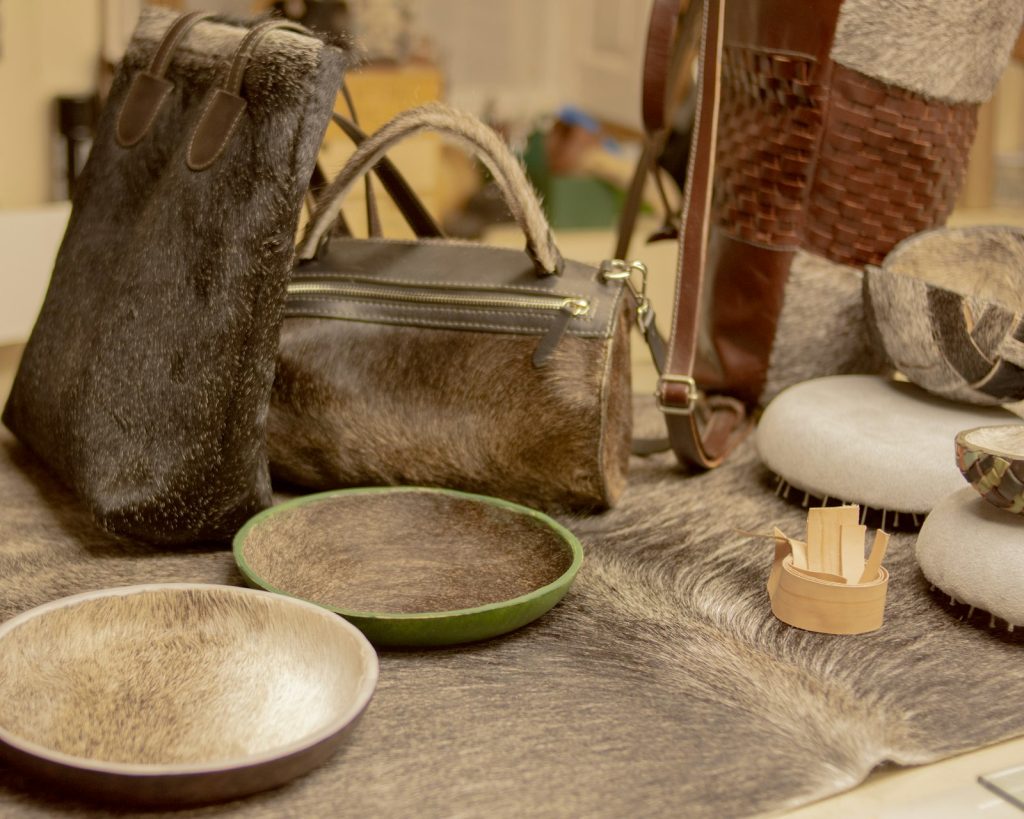
Honest sourcing note: We name every species accurately — saltwater crocodile (Crocodylus porosus), Nile crocodile (C. niloticus), American alligator (Alligator mississippiensis), caiman, reticulated python, monitor/ring lizard, ostrich and stingray — and never sell embossed calf as “exotic”. Most exotic leather is CITES-regulated (commonly Appendix II); legal cross-border trade needs export/import permits and source codes, and buyers are responsible for their country’s rules — this is general information, not legal advice; verify with your CITES Management Authority and customs broker. Prices, MOQ and lead times are indicative ranges (2025–2026), by quote. Luxury houses are referenced only as neutral examples — no affiliation. We are a B2B sourcing desk, not a tannery: we coordinate vetted, CITES-compliant suppliers.
Exotic leather for handbags means full, genuine reptile or specialty skins (not embossed calf) selected, graded, and cut specifically for bag panels, gussets, handles, and trim. On this page we outline how we source and grade exotic leather for handbags at a wholesale level for brands and ateliers, from exact species naming and belly widths to matching lots and CITES export.
Who We Are: Your B2B Exotic Bag Leather Sourcing Desk
Exotic Leather Wholesale is a B2B sourcing desk based in Indonesia. We coordinate production with vetted, CITES-compliant tanneries; we are not a tannery ourselves. Our job is to sit between your design/production team and the Indonesian supply base, so you receive the correct species, grades, sizes, and finishes for handbags — with realistic delivery and honest documentation.
We specialise in:
- True species identification (e.g. Crocodylus porosus, Crocodylus niloticus, Alligator mississippiensis, Caiman crocodilus fuscus, Python reticulatus, Varanus salvator, Varanus timorensis, Struthio camelus, stingray species) — never “generic crocodile”.
- Handbag-appropriate grading (Grade I–IV and utility grades) based on visible defects in the useable cutting area, not just “A/B/C” marketing names.
- End-to-end coordination: raw material, tanning, finishing, CITES export permitting (from Indonesia) and logistics to your nominated freight forwarder.
- B2B order structures: matched skins, colour lots, and size ranges suitable for structured handbags, soft totes, clutches, and small leather goods.
We support brand studios, OEM bag manufacturers, and independent ateliers. For finished crocodile bag production, our sister site crocodileleatherbags.com focuses on contract manufacturing; here, we stay on the raw material and semi-finished side.
Key Species of Exotic Leather Used for Handbags
Below is an overview of the main exotic species realistically available for handbags from Indonesia-connected supply, along with typical use-cases. We never mislabel caiman as “alligator” or “porosus”, and we never describe embossed calf as exotic.
Crocodylus porosus (Saltwater / Porosus Crocodile)
Use: High-end structured handbags, top-panel clutches, small leather goods.
- Cut: Primarily belly-cut skins for handbags, to maximise the rectangular flank area for front and back panels.
- Look: Small, tight, fairly regular belly scales; often used by luxury maisons for classic crocodile handbags (as a neutral example only).
- CITES: Appendix II with regulated trade. Skins typically from farms (source code C or F) or ranching (R). CITES export permit from country of origin required; import/re-export permits depend on your jurisdiction.
Crocodylus niloticus (Nile Crocodile)
Use: Luxury handbags, medium–large bags, and accessories.
- Cut: Belly-cut for bags; some back-cut for straps and certain design effects.
- Look: Slightly larger and more pronounced scale pattern than porosus; strong visual impact on medium and large bags.
- CITES: Appendix II (most range states). Farmed or ranched supply (C/R/F). Documentation requirements broadly similar to porosus but must be checked with your CITES Management Authority.
Alligator mississippiensis (American Alligator)
Use: High-luxury handbags and SLG, particularly in certain markets that specify “alligator”.
- Cut: Belly-cut for bag panels; tail and flank sections for straps and trim.
- Look: Characteristic umbilical scar on belly; commonly used by top-end brands for handbags and watch straps (no affiliation implied).
- CITES: Appendix II, mostly farmed or managed wild harvest. Export often from US/Europe, but we can coordinate inclusion in mixed-species programs where your main sourcing is Indonesia and you also need alligator.
Caiman crocodilus fuscus (Colombian / Brown Caiman)
Use: Entry-luxury handbags, fashion bags, and pieces where cost is a key factor.
- Cut: Usually belly-cut, but limited by bone content; the flanks are less flexible than porosus/niloticus.
- Look: More rigid, with bony scales; embossing and finishing can soften the line but it remains visibly different from alligator/crocodile.
- CITES: Appendix II. Important: We never describe caiman as alligator or crocodile — if you want cost-effective exotic texture, caiman is labelled as such.
Python reticulatus (Reticulated Python)
Use: Soft handbags, slouchy totes, hobos, and panels/trim with longitudinal pattern.
- Cut: Back-cut (dorsal) and front-cut (belly); for handbags we typically specify back-cut to keep the distinctive side patterns intact.
- Look: Long, continuous pattern. Works well for vertical or diagonal panel layouts and for piping/handles.
- CITES: Appendix II. Large volumes move through Indonesia for both wild-sourced (W) and farm-related codes (C/F). Buyers should verify source codes and quotas with their CITES authority.
Monitor & Ring Lizard (Varanus salvator, Varanus spp.)
Use: Smaller handbags, clutches, panels, and trims where a fine-scale texture is desired.
- Look: Small, bead-like scales. Ring lizard has characteristic ring or rosette pattern that reads well on compact bag panels.
- CITES: Many monitor lizards, including Varanus salvator, are Appendix II. Trade is regulated; we only trade skins with appropriate documentation from recognised sources.
Ostrich (Struthio camelus)
Use: Full ostrich handbags, panels, gussets, straps, and trim.
- Look: Follicle “quill” pattern on crown area; very soft yet durable. Often used for both structured and soft tote bags.
- CITES: Not CITES-listed (domesticated commercial species), but still subject to general veterinary and import regulations.
Stingray (family Dasyatidae, e.g. Dasyatis spp.)
Use: Panels, flaps, base reinforcement, and small handbags where abrasion resistance is key.
- Look: Pebbled, glass-like surface, often with a central “eye” pattern; usually finished in sombre or high-gloss colours.
- CITES: Many stingray species used in leather trade are not CITES-listed at present, but species status and trade controls can change; buyers should verify.
Back-Cut vs Belly-Cut for Handbags
The cut direction heavily influences how efficiently you can lay out handbag patterns.
Belly-Cut (Crocodile / Alligator / Caiman)
- Best for: Front and back panels, flaps, and base panels of structured bags.
- Layout: Usable rectangular area across the flanks; scale pattern more even and symmetrical.
- Species: Standard for handbags in C. porosus, C. niloticus, Alligator mississippiensis, caiman.
Back-Cut (Python and Some Crocodile Applications)
- Best for: Hobo bags, long shoulder bags, and continuous straps or trims using the length of the skin.
- Layout: Central pattern along spine highlighted; good for long, vertical front panels.
- Species: Standard for Python reticulatus. Can also be used in crocodile/alligator for specific design effects but is less common for classic handbag panels.
Grade I–IV: Honest Handbag Grading
We apply grading based on visible defects (healed scars, holes, grain damage, tanning issues) in the cutting area relevant to handbags, not the entire skin.
- Grade I (1)
- Clean, no significant defects in the main handbag panel area. Suitable for premium handbags where the belly/flank area is fully visible.
- Grade II (2)
- Minor defects that can be worked around or hidden in less visible parts (e.g. near gussets or under hardware). Often a good value choice.
- Grade III (3)
- Noticeable defects in or near the central area; suitable for smaller bags, partial panels, or designs that allow creative placement.
- Grade IV (4) / Utility
- Multiple defects; mainly for small leather goods, patchwork, or components where only portions of the skin are used.
For handbags, most brands use:
- Crocodile / Alligator: Grade I and II for visible panels; Grade III for internal or smaller pieces.
- Python / Lizard / Stingray: Grades depend heavily on pattern matching; we grade with your intended pattern layout in mind.
Typical Skins-Per-Bag Requirements
How many skins you need per bag depends on species, belly width, bag size, and panel design (single-panel vs seams). Below are indicative values based on common styles.
| Species / Type | Typical Belly Width (usable) | Bag Type | Approx. Skins per Bag* |
|---|---|---|---|
| Crocodylus porosus / niloticus | 30–40 cm | Small–medium structured handbag | 1–2 belly-cut skins |
| Crocodylus porosus / niloticus | 40–50 cm | Medium–large structured handbag | 2–3 belly-cut skins |
| Alligator mississippiensis | 35–45 cm | Small–medium top-handle bag | 1–2 belly-cut skins |
| Caiman crocodilus fuscus | 30–40 cm | Medium structured handbag | 2–3 skins (less usable area per skin) |
| Python reticulatus (back-cut) | Regular width, 2.5–3.5 m length | Hobo / slouch bag | 1–1.5 skins (1 for body, offcuts for trim) |
| Ostrich | Full skin, ~1.2–1.4 m² | Medium tote or structured bag | 1 skin for body; 1 additional for multiples or matching |
*These are planning guidelines. Final yields depend on your pattern efficiency, panel symmetry requirements, and allowed seams.
For firm costings, send your tech packs (dimensioned drawings) and we will translate them into skin counts by species, grade, and size band. You can plan your trip through sourcing and sampling with us via email or WhatsApp; we respond with practical ranges, not guesswork.
Matched Skins and Colour Consistency for Handbags
Handbags almost always require matched skins across panels and across production runs. We coordinate:
- Colour lots: Dye and finish runs grouped so that front, back, gussets, and handles match within a defined tolerance.
- Scale pattern matching: For crocodile/alligator belly panels, we select belly widths and pattern density that align visually on left/right panels.
- Pairing: For python and lizard, we can pair or “mirror” skins for symmetrical designs.
We recommend that brands specify acceptable visual tolerances up front (e.g. “max 1–2 tone variance across panels”). We then reflect that in the grading and selection brief to our tannery partners.
Measurements That Matter: Belly Width and Length
Our quotes and packing lists use clear, verifiable measurements:
- Crocodile / Alligator / Caiman: Belly width in centimetres, measured perpendicular to the backbone at the widest part of the belly; overall length is recorded but less critical for handbags.
- Python: Total length and average usable width; we distinguish between regular and wide categories.
- Ostrich: Area in square metres plus clear crown positioning for bag panels.
- Stingray: Overall dimensions and location of the “eye” relative to usable area.
We do not inflate belly widths; 34 cm means 34 cm, not “sold as 36+” because of a generous tape. This directly affects how many bags you can realistically cut per skin.
CITES and Documentation: What You Need to Know
Many reptiles used in exotic leather for handbags are listed under CITES Appendix I or II. Proper documentation is non-negotiable for legal international trade.
CITES Status Overview (General Information Only)
- Appendix I: Highest level of protection; commercial trade is generally prohibited or heavily restricted. Some crocodilian populations have Appendix II downlistings that enable controlled trade.
- Appendix II: Controlled trade with quotas and permits (many crocodiles, alligators, pythons, monitors).
- Not listed: Ostrich and many stingray species (still subject to local regulations).
Common CITES source codes you will see on permits include W (wild), R (ranched), C (bred in captivity), F (born in captivity, not meeting C) and D (Appendix I specimens bred in captivity for commercial purposes under approved operations). These codes affect how your shipment is treated by customs.
Export, Import, and Re-Export
From Indonesia, for Appendix II species, a CITES export permit is typically required. Your country may require a CITES import permit or additional wildlife and customs clearances. If you transform skins into finished bags in a third country and then ship them again, CITES re-export permits may also be necessary.
We can coordinate the Indonesian side (export permitting and pre-shipment checks) and provide copies of documents ahead of time. However, this page is general information, not legal advice. You must verify the current requirements with your own CITES Management Authority and customs broker before importing.
Indicative 2025–2026 Wholesale Ranges for Handbag Skins
Pricing depends on species, size, grade, finish, volume, and currency movements. There is no public price database. Below are indicative wholesale ranges, last verified June 2026, to help you build first-pass costings for handbags. All pricing is subject to formal quotation.
- Crocodylus porosus belly, Grade I–II, 30–40 cm: typically mid–high three figures to low four figures USD per skin, ex-works Indonesia, depending on finish and order size.
- Crocodylus niloticus belly, Grade I–II, 35–45 cm: often lower than porosus at similar sizes; broadly in the high hundreds USD per skin for standard finishes.
- Alligator mississippiensis belly, Grade I–II, 30–40 cm: similar order of magnitude to porosus, with market-specific premiums depending on source.
- Caiman crocodilus fuscus belly: typically in the tens to low hundreds USD per skin, by grade and finish, reflecting its role as a cost-effective exotic.
- Python reticulatus (bag-grade, fashion colours): generally in the low tens to low hundreds USD per skin depending on length, width, and finish complexity.
- Lizard (monitor / ring lizard) bag-grade: commonly in the low tens to low hundreds USD per skin depending on pattern and size.
- Ostrich bag-grade crown skins: usually in the low to mid hundreds USD per skin, finish and colour dependent.
- Stingray (bag panel sizes): often in the tens to low hundreds USD per piece, depending on size and finish (plain vs eye, standard vs special effects).
These bands are for orientation only. For an accurate RFQ tailored to your handbag project, please plan your trip with us via email or WhatsApp, including target retail, bag dimensions, and projected volumes.
MOQ, Lead Times, and Production Planning
Our role is to match your calendar with the realities of tanning and CITES paperwork.
- MOQs: Typically expressed per colour per finish per species. For example, a crocodile handbag program might start from a few dozen skins per colour, while python fashion colours can often be done in smaller runs. Mixed-colour sampling is possible but more expensive per skin.
- Lead times: For stocked crust/finished skins, 2–6 weeks is common for packing and export documentation. For new colours or finishes, allow 8–16 weeks from lab dips approval to shipment. CITES permit processing time is jurisdiction-dependent.
- Sampling: We can coordinate small lots or sample bundles (e.g. 4–10 skins per colour) for prototype handbags, then scale into production orders after approval.
How We Work With Handbag Brands and Ateliers
Our process is structured to support designers, product developers, and production managers:
- Design brief: You share bag types (e.g. 30 cm structured top-handle, 25 cm clutch), target markets, and price positioning.
- Material mapping: We propose species, grades, and size bands that match your design and cost expectations — for example, C. porosus Grade I for hero bags and caiman or python for broader fashion ranges.
- Costing guidance: We translate your bill of materials into indicative skin counts and price bands so your finance and merchandising teams can model scenarios.
- Sampling and colour development: We coordinate lab dips, small test lots, and matching between body skins and components (handles, trims).
- Production lots and QC: We oversee grading and selection, focused on the usable handbag area, and share photos/videos of selected lots where useful.
- Documentation and logistics: Coordination of CITES export permits on the Indonesian side and handover to your freight forwarder.
If you also need finished bag manufacturing in addition to leather sourcing, visit our sister site crocodileleatherbags.com. For watch-strap-specific programs, see alligatorwatchstrap.com.
What We Will Not Do
- We will not call caiman “alligator” or “porosus”. Labels must match the actual species on CITES documents.
- We will not describe embossed calf or PU as exotic leather.
- We will not promise that a smaller belly width can yield “two big bags” if it realistically produces one bag plus small accessories.
- We will not give legal advice on CITES or customs; we only share practical experience and specimen-level documentation.
Start a Handbag Exotic Leather Program
If you are planning a new exotic leather for handbags capsule or building an ongoing program, early alignment on species, grades, and documentation saves cost and delays later.
Share your sketches, reference dimensions, and target retail brackets, and we will respond with a structured material proposal and indicative ranges. You can plan your trip into Indonesian exotic sourcing via email or WhatsApp, from first prototypes through to repeat orders.
FAQs: Exotic Leather for Handbags
What is the best exotic leather for handbags?
For high-end structured handbags, many brands specify belly-cut Crocodylus porosus or Crocodylus niloticus in Grade I–II because of their fine scale pattern and strong brand recognition. For softer or more fashion-oriented bags, Python reticulatus works very well. For cost-conscious programs, caiman and lizard offer genuine exotic texture at lower unit costs. The “best” is what fits your design, price positioning, and market expectations.
How many crocodile skins do I need for one handbag?
A typical small–medium structured crocodile handbag (around 25–30 cm width) usually requires one to two belly-cut skins, depending on belly width, allowed seams, and whether you use the same skin for handles and gussets. Larger bags or very seam-minimal designs can require two to three skins. We can calculate realistic skin-per-bag consumption once we see your pattern or dimensioned drawings.
Can you supply matched skins for a handbag collection?
Yes. For handbags we usually supply matched lots by colour, size band, and grade so that panels across a collection are visually consistent. For example, we might build a lot of 100 crocodile skins all within 34–38 cm belly width, Grade I–II, same colour lot, for a coordinated bag line. For python and lizard, we can also pair skins for more symmetrical layouts.
What is the typical MOQ for exotic leather for handbags?
MOQs vary by species and finish. As a broad guide, basic crocodile colours often start from a few dozen skins per colour per finish, python fashion colours can be produced in smaller runs, and ostrich and stingray often have MOQs tied to tanning batch sizes. For prototype runs, we can usually coordinate smaller mixed bundles at higher per-skin costs.
How do CITES permits work for exotic handbags?
For CITES-listed species (many crocodiles, alligator, python, monitor lizard), raw skins exported from Indonesia need a CITES export permit. Your country may also require a CITES import permit. If skins are transformed into handbags in another country and exported again, a CITES re-export permit may be needed. We organise the Indonesian export documentation for skins, but you must confirm import and re-export rules with your own CITES Management Authority and customs broker, as this is general information, not legal advice.