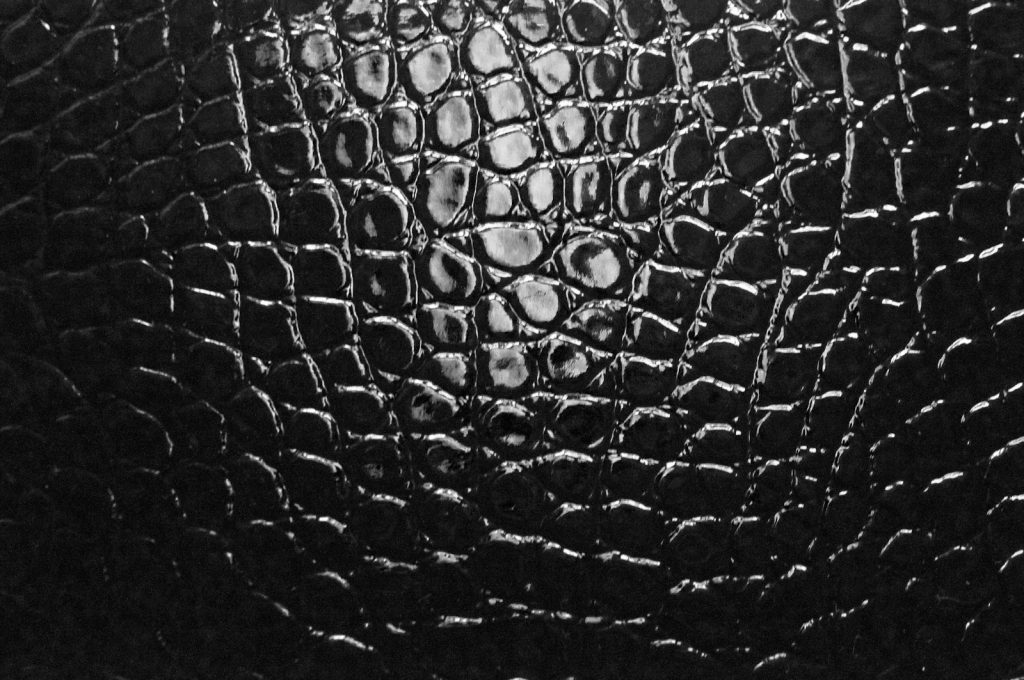
Honest sourcing note: We name every species accurately — saltwater crocodile (Crocodylus porosus), Nile crocodile (C. niloticus), American alligator (Alligator mississippiensis), caiman, reticulated python, monitor/ring lizard, ostrich and stingray — and never sell embossed calf as “exotic”. Most exotic leather is CITES-regulated (commonly Appendix II); legal cross-border trade needs export/import permits and source codes, and buyers are responsible for their country’s rules — this is general information, not legal advice; verify with your CITES Management Authority and customs broker. Prices, MOQ and lead times are indicative ranges (2025–2026), by quote. Luxury houses are referenced only as neutral examples — no affiliation. We are a B2B sourcing desk, not a tannery: we coordinate vetted, CITES-compliant suppliers.
Alligator leather wholesale means buying American alligator (Alligator mississippiensis) skins in bulk, graded by size, finish, and defects for scaled luxury production. On this page I explain exactly what you get when you source alligator skins through Exotic Leather Wholesale: real species, real belly widths in centimeters, transparent grading, and CITES-compliant export from vetted tanneries to your workshop.
What Is American Alligator Leather? (A. mississippiensis)
American alligator leather comes from Alligator mississippiensis, a species native to the southeastern United States and managed under a tightly controlled, sustainable harvest and farming system. In the trade, this is the “true alligator” used by top-end watch strap, small leather goods, and footwear manufacturers.
Key identifiers:
- Species: American alligator, Alligator mississippiensis
- CITES status: Primarily Appendix II populations under the U.S. management system (trade is regulated, not banned)
- Look & feel: Rounded, pebbly belly scales with a soft, clean, relatively flat grain and little to no prominent “dot” pores in the center of each scale
- Typical use: Flagship luxury — watch straps, small leather goods, belts, footwear, and high-spec bags
In alligator leather wholesale, skins are sold primarily on a belly width basis (measured in centimeters across the widest point), and price per cm increases strongly with both width and cosmetic grade.
Alligator Leather Wholesale With Exotic Leather Wholesale
Exotic Leather Wholesale is a B2B sourcing desk, not a tannery. My role is to stand between your specifications and our vetted producer network and translate your design requirements into precise species, grades, sizes, and finishes that work in production.
What We Do (and Don’t Do)
- We coordinate sourcing with CITES-compliant U.S. and third-country tanneries for American alligator leather, plus Indonesian partners for other exotics.
- We verify species and grading — every quote clearly states “American Alligator (Alligator mississippiensis)”, not generic “gator” or “croc,” and grades are defined, not marketing terms.
- We do not mislabel crocodile as alligator, caiman as crocodile, or embossed calf as “exotic.” If it is embossed bovine, we call it embossed bovine.
- We don’t publish a price list. Indicative ranges are here for planning only; live quotes depend on grade, size, finish, volume, and FX.
- We are not your legal counsel. We can explain CITES basics and documentation commonly used, but you must verify requirements with your CITES Management Authority and customs broker.
Typical Wholesale Alligator Orders We Support
- Watch strap makers: 20–32 cm belly widths, mostly Grade I–II, crust or finished, primarily belly cut, sometimes hornback for specialty straps. (Finished watch strap production itself is handled on our sister site alligatorwatchstrap.com.)
- Luxury small leather goods: 28–38 cm bellies for wallets and card holders, Grade I–II for top lines, Grade III–IV for secondary lines.
- Footwear and belts: 32–45+ cm bellies or flanks, depending on construction and pattern pieces.
- Bag and luggage makers: 38–55+ cm bellies, often matched pairs by color, grade, and size. Finished bags are handled separately at crocodileleatherbags.com.
To discuss a project or request a quote, you can plan your trip through the sourcing process with us (email or WhatsApp) and we will walk you through species, sizes, and grades that match your product and budget.
Species Accuracy: American Alligator vs Crocodile vs Caiman
Mislabeling is common in the exotic leather market. Our position is simple: correct species naming is non-negotiable.
American Alligator vs Crocodile
In trade usage, “alligator” usually means American alligator (Alligator mississippiensis), while “crocodile” usually means one of:
- Crocodylus porosus – saltwater / “porosus” crocodile
- Crocodylus niloticus – Nile crocodile
Visual and handling differences (belly area):
- Species
- American alligator (A. mississippiensis)
- Belly scale shape
- Rounded, pebbly, often more irregular and organic
- “Pores” in center of scale
- Less obvious, usually not the sharp “peg mark” seen in porosus
- Typical hand feel
- Soft, supple, slightly “buttery” when well-tanned
- Common price position
- Top-tier; often similar to or above high-end crocodile for like-for-like grade and size
By contrast, C. porosus often shows more rectangular belly scales with very distinct pores (“peg marks”) in the center of each scale, and is also a flagship luxury species. C. niloticus tends to have larger, more rectangular scales and a different “read” across the belly panel.
Caiman and Other Reptiles
Caiman (e.g. Caiman crocodilus complex) is a completely different product class from American alligator:
- Harder hand due to more pronounced osteoderms
- Smaller, more fragmented panels
- Not a substitute for genuine alligator in top-end watch straps or small leather goods
We also handle other exotics — reticulated python (Python reticulatus), monitor and ring lizard, ostrich (Struthio camelus), stingray (various Dasyatidae) — but these are always labeled with their correct species and trade descriptions, never as “alligator.”
Grading American Alligator Skins (Grades I–IV)
Grading systems vary slightly by tannery, but for American alligator we work on a clear four-grade cosmetic classification centered on the prime belly area.
Grade I – Premium
Grade I is suitable for the most visible, demanding applications and is what many luxury houses use for mainline items:
- Belly panel: Essentially free of significant scars, holes, deep scratches, or tanning defects in the main cutting area
- Permissible defects: Tiny marks or growth lines at the edges that will fall outside pattern pieces
- Usage: Flagship watch straps, small leather goods, high-end handbags
Grade II – Select
Grade II still cuts very clean panels with careful pattern placement:
- Belly panel: Minor defects present but avoidable by nesting patterns intelligently
- Permissible defects: Small scars, piqure marks, slight grain irregularities that can be cut out
- Usage: Quality straps and leather goods where some yield loss is acceptable
Grade III – Commercial
Grade III is for less defect-sensitive products or heavily cut patterns:
- Belly panel: Noticeable scars or defects affecting yield, but still structurally sound
- Usage: Footwear pieces, belt strips, components where defects can be positioned inconspicuously, secondary lines
Grade IV – Utility
Grade IV is a working-grade skin:
- Belly panel: Significant defects, scars, or tanning issues across prime areas
- Usage: Small cut parts, experimental finishes, or price-sensitive lines where visible imperfections are acceptable or part of the design story
On any quote, we specify the grading logic we are using and share photos representative of the actual batch (not catalog-only images) so you can make a realistic yield and costing assessment.
Measuring Alligator Skins: Belly Width and Length
In alligator leather wholesale, the key commercial measurement is belly width in centimeters. Length also matters for certain projects but pricing is usually quoted per cm of belly width.
How Belly Width Is Measured
Belly width is measured straight across the widest part of the belly, perpendicular to the backbone, after tanning and drying. Typical wholesale brackets include:
- 20–24 cm – small; often for watch straps and small SLG components
- 25–29 cm – compact SLG/wallets and straps
- 30–34 cm – broader SLG, smaller handbags, footwear uppers
- 35–39 cm – handbags, belts, larger SLG
- 40–49 cm – larger handbags, briefcases, luggage components
- 50+ cm – very large panels; limited supply, often made to order
Length and Cut
We normally specify approximate length ranges, but keep in mind:
- Belly cut: The hide is opened along the backbone, exposing the smooth belly. This is what most alligator watch straps, wallets, and bag fronts use.
- Back / hornback cut: The hide is opened along the belly, preserving the dorsal scales and “horns.” This is used in more aggressive-looking products (e.g. hornback belts, some strap designs).
For pattern planning, we share both belly width and usable belly panel length so your CAD or manual layouts are based on realistic cutting areas.
Indicative Wholesale Pricing for Alligator Skins
Indicative 2025–2026 wholesale prices for American alligator skins are usually understood per cm of belly width, then multiplied by the width of each skin. Actual pricing depends heavily on grade, finish, size, volume, and FX at time of order. What follows is not a public price list; it is planning guidance only, last verified June 2026.
Per-Centimeter and Per-Skin Ranges
Across the grades and size brackets most of our clients order, alligator hides bulk pricing often lands in the following envelopes:
- Per cm of belly width: roughly USD 16–30+ per cm for commercial to premium grades
- Per skin (typical 30–35 cm bellies): roughly USD 550–1,000+ per skin for good commercial to high cosmetic grades
Example (purely indicative):
- 30 cm Grade II, classic finish – 30 × USD 18–22 ≈ USD 540–660 per skin
- 35 cm Grade I, high-fashion color, special finish – 35 × USD 25–30+ ≈ USD 875–1,050+ per skin
Larger bellies (40+ cm) and very specific colors/finishes (especially in smaller production runs) can command a significant premium above these mid-range examples.
What Drives Price
- Grade: Moving from Grade II to Grade I often adds a noticeable premium per cm.
- Size: Each extra cm in belly width increases both per-skin cost and cost per usable panel, but can improve yield.
- Finish: Simple aniline or classic finishes usually cost less than complex fashion finishes, hand-antiqued, or multi-step surface treatments.
- Volume: Larger, regular orders generally price better than ad-hoc, small-batch purchases.
- FX & logistics: Currency swings, freight modes, and documentation costs all affect landed cost for you.
Minimums and Lead Times
As a B2B gator leather supplier, we work on an order-by-order basis:
- MOQ: Often 5–20 skins per color/finish/size bracket for standard items; special colors or finishes can require higher minimums.
- Lead time: From stock: typically several weeks including documentation and freight. For made-to-order colors or finishing: several weeks to a few months, depending on tannery load and CITES processing in the exporting country.
For a current range tailored to your spec, plan your trip through the quoting process with us and we will confirm live pricing and timing over email or WhatsApp.
Finishes and Colors Available in Alligator Leather Wholesale
Alligator lends itself to a wide variety of finishes; some are more forgiving in grading and yield than others.
Main Finish Types
- Classic / aniline: Shows the natural pebble pattern clearly, with subtle sheen. Demands better grades because defects are less masked.
- Semi-aniline / lightly pigmented: Balances natural look with some coverage for minor surface imperfections.
- High gloss / patent-type: Mirror-like finish; requires careful handling and often higher-grade selection to avoid visible defects.
- Matte / nubuck-like: Softer visual; can be very modern but may mark more easily, important for product positioning.
- Fashion finishes: Metallic, pearl, gradients, hand-antiqued, or specialty effects — priced and quoted individually.
Color Considerations
Standard blacks, browns, and navy tones are usually easier to source and replenish. Custom colors, contrast dyes, and seasonal fashion shades are often made to order and can carry:
- Higher MOQs per color
- Longer lead times
- Less flexibility on returns, due to the custom nature of production
End Uses: Matching Species, Grade, and Size to Product
Choosing the right combination of species, grade, and measurement is the difference between a profitable production run and an expensive learning exercise.
Watch Straps
- Species: American alligator is the benchmark for high-end straps.
- Belly width: 20–28 cm typically provides good strap yield with manageable cost.
- Grade: Grade I–II for visible strap faces; Grade III may be used for linings or less visible parts depending on brand standards.
If you prefer to outsource strap production rather than buying skins, our sister site alligatorwatchstrap.com focuses on finished straps using correctly-specified leathers.
Small Leather Goods (Wallets, Card Holders)
- Belly width: 28–36 cm allows efficient cutting of exterior panels and flaps.
- Grade: Grade I for hero products; Grade II where a few minor defects can be cut away.
- Cut: Belly cut for even pattern across the face panels.
Footwear and Belts
- Belly width: 32–45+ cm depending on shoe size range and pattern sets.
- Grade: Grade II–III widely used in footwear; Grade I for showpiece lines.
- Cut: Both belly and hornback cuts are used; hornback for more pronounced, aggressive styling.
Handbags and Larger Leather Goods
- Belly width: 38–55+ cm for uninterrupted front panels, depending on bag size and design.
- Grade: Grade I for the main outside panels; interior or gusset components may use lower grades.
- Color matching: For multi-skin bags, we work to match hue, tone, and finish to a single batch.
For finished bag programs in crocodile and alligator, including prototyping and small-series runs, our sister site crocodileleatherbags.com covers finished product rather than raw material.
CITES and Legal Trade in Alligator Leather
Alligator mississippiensis is managed under international and national frameworks that allow regulated trade in skins and finished products. The information here is general and not legal advice; you must confirm exact requirements with your CITES Management Authority and customs broker before committing to a shipment.
CITES Appendix and Source Codes
- CITES Appendix: Most American alligator trade operates under Appendix II listings (regulated trade), with some historical populations previously listed more restrictively.
- Common source codes in documents:
- W – wild
- R – ranched
- C – captive-bred
- F – born in captivity (other than C or D)
- D – Appendix I species bred in captivity for commercial purposes in registered operations (more relevant for some crocodile cases than American alligator today)
Basic Documentation Flow
For a typical alligator leather wholesale shipment, you should expect some combination of the following documents:
- Export permit: Issued by the exporting country’s CITES Management Authority, referencing species, source code, quantity (often in number of skins) and sometimes total area or weight.
- Import permit or prior approval: Required or recommended by many importing states for Appendix II species; check with your local authority.
- Re-export permit: If skins are re-exported after tanning in a second country, a re-export permit will reference the original permits.
- Commercial invoices & packing lists: Must be consistent in species names and quantities with CITES documentation.
Our role as a sourcing desk is to work only with suppliers who have a track record of handling CITES documentation properly and to ensure the commercial paperwork matches the CITES permits in species and quantities. We cannot replace the advice of your national authority or customs broker.
Our Sourcing Process: From Tannery to Your Atelier
To keep expectations realistic and production efficient, we run a structured sourcing process from quote to delivery.
1. Specification and RFQ
We start with:
- Intended product category and target retail position
- Species (e.g. American alligator), cut (belly or hornback), and finish preference
- Target grades and belly width brackets
- Approximate volumes and timing
From there, we request current offers from our vetted partners and respond with an indicative price and lead time range.
2. Sampling and Test Runs
For most first-time projects, we recommend:
- Ordering a small batch of skins across the target size/grading in the chosen finish
- Producing samples or a pilot run to confirm yield and pattern placement
- Refining grade/size preferences and acceptable defect thresholds based on real cutting data
3. Production Orders
Once you are comfortable with yield and finish:
- We lock in specifications and target ranges in a purchase order.
- The tannery processes or selects skins according to the agreed parameters.
- CITES documentation is applied for and issued by the national authority before export.
4. Logistics and Delivery
Depending on the shipment size and destination, freight may go by air cargo or courier. We coordinate with your nominated broker or forwarder, or introduce you to providers familiar with CITES-regulated goods in your corridor.
To begin this process for American alligator skins, plan your trip from RFQ to first shipment with our team; WhatsApp coordination is available for faster back-and-forth on specs and documents.
Comparison: American Alligator vs Key Alternatives
| Attribute | American Alligator (A. mississippiensis) |
Saltwater Crocodile (C. porosus) |
Nile Crocodile (C. niloticus) |
Caiman (Caiman spp.) |
|---|---|---|---|---|
| Belly scale shape | Rounded, pebbly | More rectangular with distinct central pores | Larger rectangles, more regular rows | Smaller, more fragmented, harder |
| Typical hand feel | Soft, supple | Fine, firm but luxurious | Slightly firmer than porosus, varies by tannage | Much stiffer due to osteoderms |
| Price position* | Flagship, very high | Flagship, very high | High, often slightly below porosus/alligator | Entry-level exotic |
| Common uses | Top-end straps, SLG, bags | Top-end bags, SLG | Footwear, bags, SLG | Price-sensitive products |
| CITES | Predominantly App. II (regulated) | App. II and some App. I populations | App. II (regulated) | Generally App. II (varies by taxon) |
*Relative, indicative only; real prices depend on grade, size, finish, and supply conditions.
How to Brief Us for an Alligator Leather Project
To get a fast, accurate quote for American alligator skin wholesale, sharing the following details is extremely helpful:
- End product (e.g. 20 mm watch straps, compact wallets, 35 cm handbags)
- Species preference (explicitly: “American alligator – A. mississippiensis”)
- Preferred belly width range and acceptable spread
- Target grade range and defect tolerance (if you have in-house grading references, share them)
- Finish and color (with reference photos or Pantone where possible)
- Estimated order volume and forecast (single batch vs rolling program)
- Destination country and any known CITES/customs constraints
You can send this via our RFQ form or WhatsApp; start here to plan your trip through the sourcing and documentation steps.
FAQs: American Alligator Leather Wholesale
What is the difference between alligator and crocodile skin?
American alligator (Alligator mississippiensis) has rounder, more pebbly belly scales and a softer hand than most crocodiles. Saltwater (Crocodylus porosus) and Nile (Crocodylus niloticus) crocodiles typically show more rectangular belly scales and more obvious central “pores” in each scale. All three are high-end exotics; the choice is mostly aesthetic and brand-driven, but they must never be interchanged or mislabeled on documents or product descriptions.
Is your alligator leather CITES-legal and can I import it?
We only source American alligator skins through partners working under CITES-compliant systems, with the necessary export or re-export permits. However, import legality and permit requirements depend on your country. This page provides general information only; you must confirm requirements with your national CITES Management Authority and your customs broker before shipment.
What is the typical price per centimeter for alligator hides in bulk?
Indicative 2025–2026 ranges for American alligator often fall around USD 16–30+ per cm of belly width for commercial to high cosmetic grades, translating to roughly USD 550–1,000+ per skin for common size brackets. Actual pricing depends on grade, width, finish, volume, and FX, and is always confirmed by quote at the time of order.
Are your alligator skins sourced from the United States?
American alligator (A. mississippiensis) originates in the United States under a regulated farming and wild harvest system. Skins may be tanned in the U.S. or in other countries under CITES re-export rules. On every quote we specify origin and tanning country, along with the species and documentation route.
Can you supply both belly-cut and hornback alligator hides?
Yes. For watch straps, small leather goods, and most handbags we primarily supply belly-cut skins. For belts and certain statement products we can also coordinate hornback cuts. Both will be specified in the quote, along with belly width, grade, finish, and indicative yield considerations.