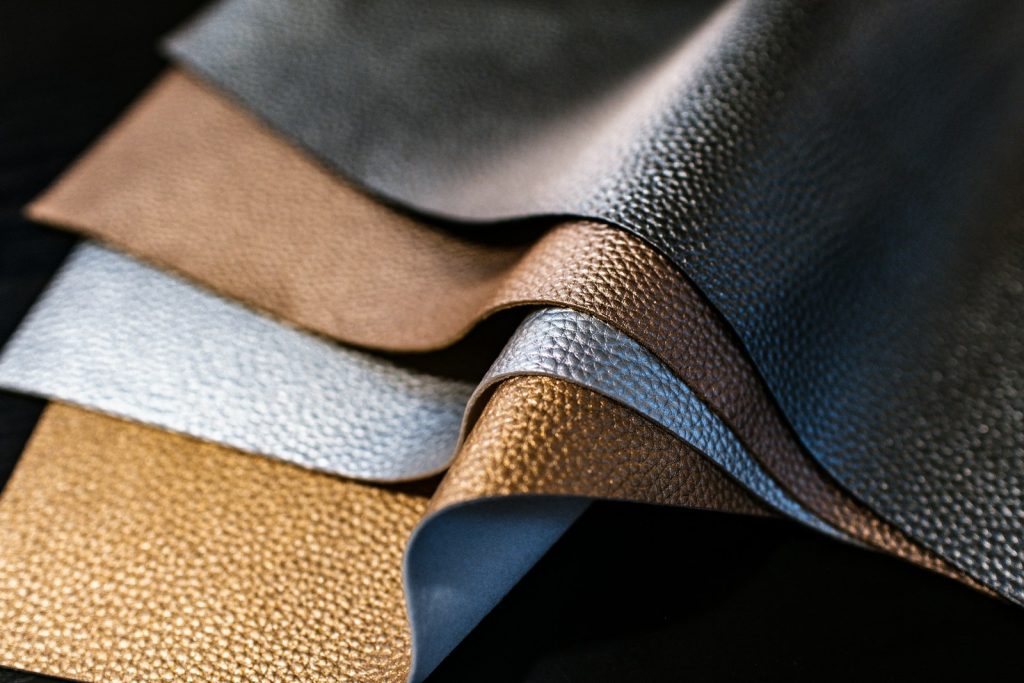
Honest sourcing note: We name every species accurately — saltwater crocodile (Crocodylus porosus), Nile crocodile (C. niloticus), American alligator (Alligator mississippiensis), caiman, reticulated python, monitor/ring lizard, ostrich and stingray — and never sell embossed calf as “exotic”. Most exotic leather is CITES-regulated (commonly Appendix II); legal cross-border trade needs export/import permits and source codes, and buyers are responsible for their country’s rules — this is general information, not legal advice; verify with your CITES Management Authority and customs broker. Prices, MOQ and lead times are indicative ranges (2025–2026), by quote. Luxury houses are referenced only as neutral examples — no affiliation. We are a B2B sourcing desk, not a tannery: we coordinate vetted, CITES-compliant suppliers.
Ostrich leather wholesale means buying farmed Struthio camelus skins in volume directly from tanneries or export consolidators, graded, measured, and priced for production. At Exotic Leather Wholesale we handle ostrich skin wholesale sourcing end‑to‑end, from Indonesia and regional partners to your workshop, with clear grades, traceability and indicative price ranges.
What Is Ostrich Leather in the Trade?
Ostrich leather in the trade refers specifically to farmed Struthio camelus, processed as:
– Full‑quill ostrich leather (the crown area with raised follicles)
– Ostrich leg leather (narrow, scaled panels from each leg)
– Non‑quill body panels (used for linings or lower‑visibility components)
No wild ostrich is involved. Struthio camelus is not CITES‑listed, so there is no CITES permit requirement for the species itself. Many buyers still request farm/abattoir traceability and slaughter documentation for brand compliance and customs clarity.
Key facts:
- Species
- Ostrich – Struthio camelus (farmed, non‑CITES)
- Main producing countries
- South Africa and Namibia, with secondary farming in other regions
- Core articles
- Full‑quill panels (bags, small leather goods), leg leather (watch straps, small leathergoods, accents)
- Measurement
- Full skins in square feet; legs sold per piece (pair or per leg)
- Trade form
- Mostly crust and finished; some wet‑blue at volume
We are a B2B sourcing desk, not a tannery. Our job is to match your specification with vetted, compliant tanneries and consolidators and manage the trade side: offers, QC, packing, export paperwork and freight coordination.
Full‑Quill Ostrich Leather: Grades, Sizes, Uses
Full‑quill ostrich leather is the premium section: the “crown” with dense, raised follicles that give ostrich its recognisable texture.
How Full‑Quill Ostrich Is Measured
Trade measurement is by usable square foot of the tanned skin. Industry practice:
– Typical full skin size: ~13–18 sqft usable (South African/Namibian stock)
– Crown (dense quill) zone: central 6–9 sqft, depending on grade and animal size
– Measurement line: tanneries usually stamp total area; yield over your pattern is a separate calculation
We always ask for:
– Stamped area in sqft
– Crown length and width in cm
– Photo or packing list indicating any defects in the quill panel
This matters if you’re cutting structured bags, long wallets or panels with directional symmetry.
Full‑Quill Grades in Practice
Each tannery has its own grading language, but the structure is similar:
– Grade I / A: clean crown, minimal scars or growth marks, uniform dye take
– Grade II / B: 1–2 small defects in the crown or light growth marks
– Grade III / C and below: more visible defects, suitable for smaller articles, patchwork or distressed finishes
You pay for how much clean crown you can cut, not just total sqft.
Indicative trade structure:
– Top grades: prioritized for brands making structured bags or wallets
– Mid grades: for smaller leathergoods, sneakers, panel work
– Lower grades: patchwork, test runs, or “character” finishes
Typical Uses for Full‑Quill Ostrich
Common B2B demand includes:
– Bags: totes, flap bags, crossbody panels, gussets
– Small leathergoods: wallets, cardholders, key cases
– Sneakers: quarter panels, heel counters
– Watch straps: less common for full‑quill; some makers feature a small quill patch on the strap
Neutral example: several luxury houses have historically used full‑quill ostrich for classic tote and flap bag lines; this is the reference many designers have in mind when they spec color and grain.
Full‑Quill Ostrich Pricing (Indicative 2025‑2026)
We quote each order individually. As a directional range (last verified June 2026, subject to grade, size, finish, volume and FX):
– Finished full‑quill: ~USD 10–20/sqft
– Typical per‑skin range (13–18 sqft): ≈ USD 140–360/skin for good, commercial grades
Pricing moves with:
– Grade (crown defects heavily discounted or upgraded)
– Finish complexity (anilines and special effects cost more than standard pigments)
– Volume commitment (sample lots vs rolling orders)
– Currency (many South African producers quote in EUR or USD; Indonesian finishing in IDR indexed to USD)
We don’t publish a live price list; the trade doesn’t work on fixed menus for exotics. To get a current quote for your spec, plan your trip with us by email or WhatsApp and we’ll source offers from our partner network.
Ostrich Leg Leather: Scaled Panels for Straps and Small Goods
Ostrich leg leather is a separate article from full‑quill and trades on different metrics.
What Makes Ostrich Leg Leather Different?
Each bird yields two narrow, scaled panels. Key characteristics:
– Shape: long “V” or “Y” profile, denser/scaled at the front
– Width: roughly 6–9 cm usable at the widest, tapering
– Length: ~35–45 cm usable after trimming
– Grain: small scales reminiscent of reptile, but it is avian – not reptile
Ostrich leg leather is popular because it offers an exotic, scaled look without CITES paperwork and at a lower cost per article compared to crocodilian or python.
Ostrich Leg Leather Uses
Primary B2B applications:
– Watch straps: classic use; one leg often yields 1–2 straps depending on lug width and pattern
– Belt inlays and tips: combined with calf for backing
– Small leathergoods: card sleeves, pen sleeves, trim panels on wallets or key fobs
– Footwear details: tongue, heel tab, or toe cap accents
h3>Ostrich Leg Leather Pricing (Indicative 2025‑2026)
Trade pricing is usually per piece (leg), sometimes quoted per pair.
Indicative wholesale range, last verified June 2026:
– Finished ostrich leg leather: ≈ USD 15–40 per leg
Range drivers:
– Panel size and cut (full, straight, minimal edge damage vs more irregular)
– Grade (scales and surface defects)
– Finish (flat, semi‑aniline, glazed, antique, metallic)
– Volume (dozens for independent strap makers, hundreds+ for OEM strap factories or small leather goods brands)
For watch strap production, landed material cost per strap from ostrich leg is usually lower than from crocodilian tails or American alligator small belly panels, which is why many mid‑ to high‑tier strap brands specify it.
Ostrich vs Other Exotics in the Trade
If you buy multiple exotics, it helps to benchmark ostrich against crocodile, alligator, caiman, lizard and python.
| Species | Scientific name | CITES status | Typical use | Indicative finished price range (wholesale) |
|---|---|---|---|---|
| Ostrich (full‑quill) | Struthio camelus | Not listed | Bags, SLG, some footwear | ~USD 10–20/sqft (≈ USD 140–360/skin) |
| Ostrich leg | Struthio camelus | Not listed | Watch straps, trims, SLG | ~USD 15–40/leg |
| Saltwater crocodile | Crocodylus porosus | CITES App. II (ranch/farm) | High‑end bags, straps | Significantly higher per sqft than ostrich; by quote |
| Nile crocodile | Crocodylus niloticus | CITES App. II | Bags, belts, footwear | Typically lower than porosus; by quote |
| American alligator | Alligator mississippiensis | CITES App. II (managed) | Bags, high‑end straps | Premium vs most crocodiles; by quote |
| Caiman | Caiman spp. | CITES App. II | Entry‑level exotic goods | Lower than ostrich full‑quill per sqft |
| Reticulated python | Malayopython reticulatus | CITES App. II | Bags, sneakers, belts | Sold per cm length; by quote |
| Monitor & ring lizard | Varanus spp. / Varanus salvator | CITES App. II | SLG, straps, panels | By quote; generally below alligator |
| Stingray | Dasyatidae spp. | Some spp. CITES‑listed | Belts, wallets, panels | By quote; sold per sqft or panel |
Ostrich’s advantage:
– Non‑CITES: no CITES import or re‑export permits required for the species itself
– Yield: broad crowns and body panels for bags, vs narrower reptile bellies
– Versatility: full‑quill for visual impact, leg for lower‑volume accessories
We never mislabel embossed calf or goat as “exotic”. If you want embossed bovine for cost reasons, we’ll state it clearly as embossed calf or cowhide in the RFQ and invoice.
Supply Origins: South African/Namibian Production, Regional Finishing
The ostrich supply chain is different from crocodilian and python.
Primary Production Regions
Global farmed ostrich production is still centred in:
– South Africa
– Namibia
These origins dominate for:
– Fresh/frozen skins from abattoirs
– Tanned crust and finished full‑quill for export
– Leg leather, often finished in the same facilities as body skins
Other countries farm ostrich, but volumes are much smaller and often used for domestic markets or niche tanners.
Indonesia & Regional Tannery Capability
Indonesia is not a major farm origin for ostrich, but Indonesian and regional tanneries can:
– Import wet‑blue or crust ostrich from South Africa/Namibia
– Re‑finish to specific color cards, fashion shades, or special effects
– Split, buff, and finish ostrich leg leather for watch strap and SLG factories in Asia
Typical division of labor:
– Origin tanneries: heavy lifting – raw to wet‑blue/crust, standard fashion colors, high‑volume programs
– Regional tanneries (e.g., Java): shorter‑run, color‑critical, or effect‑driven batches for specific buyers
We coordinate both:
– Direct ex‑origin shipments, if you want standard finishes at origin prices
– Regional refinishing if you need closer technical support in Asia, or small‑run effects that are easier to develop in Java than in South Africa/Namibia
Forms: Raw, Wet‑Blue, Crust and Finished Ostrich
You can buy ostrich in several trade forms, depending on your place in the chain.
Raw (Salted) Ostrich Skins
– Who buys: tanneries and large finishing houses
– Requirements: cold‑chain/salted handling, trimming, tanning recipes
– Trade realities: minimums are high, and QC risk is on the buyer; this is not suitable for most ateliers or brands
We can help industrial clients source raw salted ostrich from abattoirs or aggregators, but only at pallet‑level MOQ and with clear trim/spec protocols.
Wet‑Blue Ostrich
– Chrome‑tanned but unfinished
– Sold mostly to tanneries and large finishing shops
– Advantages: move some value‑add from origin to your region; still requires full finishing capability
Again, MOQ is substantial and only makes sense if you have or partner with a finisher.
Crust Ostrich
– Tanned and dried, without final surface finishing or color
– Sold to finishers or brands who want to control finishing but not full tanning
– More flexible than wet‑blue – easier to ship, inspect and store
For many medium‑sized brands with a finishing partner, crust offers a good balance: origin tanning, regional finishing.
Finished Ostrich (Most Common for Ateliers)
– Fully finished and dyed, ready to cut
– Offers: standard color charts plus custom colors at MOQ
– Surface options:
– Full‑aniline (more natural variation, higher grade demand)
– Semi‑aniline
– Pigmented (more coverage on lower grades)
– Matt, satin, gloss
– Antique, hand‑rubbed or washed effects
– Metallic or pearlescent (often for small leathergoods or trims)
Most ateliers, OEM factories and independent makers buying ostrich leather wholesale will work in finished form, with RFQs specifying:
– Species and article (Struthio camelus, full‑quill or leg)
– Grade range acceptable
– Color/finish
– Thickness
– Expected annual volume
MOQ, Lead Times and Color Development
Ostrich is a specialty article; MOQ and lead times reflect that.
MOQ by Article
Indicative wholesale MOQ ranges (actuals by quote):
– Full‑quill finished, standard colors:
– By skin: often from ~20–30 skins/color for ongoing colors
– For new B2B accounts, some consolidators can pack mixed colors/grades above a total carton MOQ
– Full‑quill finished, custom colors:
– Often ~30–50 skins/color minimum, depending on tannery policy
– Ostrich leg leather:
– Often from ~50–100 legs/color, sometimes lower if accepting mixed grades or colors
For micro‑brands or prototyping, we can often arrange:
– Smaller sample lots drawn from stock colors
– Mixed‑grade packs clearly labeled as such, so you can cost your pattern and defect tolerance realistically
Lead Times
Indicative lead time ranges (2025‑2026 conditions, always re‑confirmed at RFQ):
– Ex‑stock colors:
– Preparation and export paperwork: ~1–3 weeks after payment and QC
– Transit time: varies by route (air vs sea freight)
– Custom colors or finishes:
– Lab dips: ~2–4 weeks
– Production: generally ~4–8 weeks after lab dip approval, depending on queue and volume
We manage the calendar with you:
– Sampling and lab dips aligned with your design calendar
– Bulk production dates that match your cut schedule
– Buffer for permit/customs for CITES articles in mixed shipments (crocodile, python, lizard, stingray) – even though ostrich itself is not CITES‑listed, mixed pallets must respect the slowest component
For a live schedule and to align with your launch, plan your trip and send us your calendar via email or WhatsApp; we’ll map it against tannery capacity.
CITES and Compliance for Ostrich Buyers
Ostrich (Struthio camelus) is farmed and not listed on CITES appendices. That simplifies life compared to:
– Crocodylus porosus and Crocodylus niloticus (CITES Appendix II in ranch/farm programs)
– Alligator mississippiensis (CITES Appendix II under U.S. management)
– Malayopython reticulatus, Varanus spp., Dasyatidae spp. where relevant
However, compliance still matters.
Ostrich and CITES
Key points:
– No CITES export/import permits are required for ostrich itself
– Mixed shipments that include CITES‑listed species still require full CITES paperwork for those species:
– Export permits
– Possible re‑export permits
– Correct source codes (W, R, C, F, D) as issued by the exporting Management Authority
We treat ostrich the same way we treat crocodile, python or lizard in terms of traceability:
– Clear species naming on all documents
– Origin country and tannery identification
– For brands with internal ESG/SR requirements, we can ask for farm identifiers or slaughterhouse documentation where the supply chain maintains it
Nothing here is legal advice. Regulations change, and enforcement practices differ by country. Always confirm your obligations with:
– Your national CITES Management Authority
– Your customs broker
– Your internal legal/compliance team
Our role is to structure the paperwork according to current practice, but final compliance responsibility rests with the importer of record.
How Exotic Leather Wholesale Works With B2B Ostrich Buyers
We sit between your spec and multiple compliant suppliers.
We Are a Sourcing Desk, Not a Tannery
We do not tan or finish skins ourselves. Instead, we:
– Qualify tanneries and consolidators for:
– Species correctness (no substitution, no “generic crocodile”)
– Proper paperwork and traceability
– Consistent grading and finishing standards
– Collect and compare offers:
– Grade/size/finish vs your brief
– Indicative price ranges and lead times
– Present you with options:
– Ex‑origin stock vs made‑to‑order
– Different grade mixes to match your price point
If you proceed with one of our partner offers, they may pay us a referral fee at no extra cost to you. No one can pay to change what we publish, and we will not mislabel a species or grade to close a deal.
Workflow From RFQ to Delivery
Typical steps:
1. RFQ / Brief
– Species/article: Struthio camelus full‑quill and/or ostrich leg
– Form: crust or finished
– Grades: target grade and acceptable range
– Colors and finishes
– Thickness and cutting requirements
– Target price range and volumes
2. Supplier Matching & Quotes
– We solicit offers from vetted partners in South Africa, Namibia, Indonesia and regional finishing houses
– We send you:
– Photos and data of comparable current production
– Indicative pricing (ranges) and firm quotes where possible
– MOQ and lead time options
3. Sampling & Color Development (If Needed)
– Sample skins/legs from stock or test batch
– Lab dips for custom colors
– You review under your own light and production conditions
4. Order Placement
– Final spec locked (species, article, grade, color, thickness, quantity)
– Commercial terms and payment route agreed (direct to supplier or via trading company, depending on jurisdiction and your preference)
5. Production & QC
– We monitor progress against the agreed calendar
– QC:
– In‑house tannery QC plus additional checks where warranted
– Photos and packing lists before shipment
6. Export, Freight and Import Support
– For ostrich‑only shipments: standard export documentation
– For mixed exotics: CITES documents for crocodile, alligator, caiman, python, lizard, stingray as applicable
– Coordination with your forwarder or ours
7. Post‑Shipment Support
– Issue resolution if actual grades or sizes diverge materially from the agreed spec
– Feedback loop into subsequent batches (e.g., color tweaks, tighter grade definition)
To start this process, share your spec via plan your trip; include a WhatsApp contact if you prefer real‑time clarification on technical points like yield and grading.
Who Buys Ostrich Leather and Why
You see ostrich across several segments of the trade.
Luxury and Premium Brands
Neutral examples: some European and Asian luxury houses have used full‑quill ostrich for classic bag lines and high‑end small leathergoods. Drivers:
– Visual identity: recognizable, distinctive follicles
– Story: long association with high‑end leathergoods
– Non‑CITES: easier global logistics than crocodilian, though still highly controlled internally
These buyers usually demand:
– Narrow grade bands
– Tight color tolerances with standard references
– Long‑term continuity on colors
Independent Ateliers and OEM Factories
Smaller brands and OEM manufacturers choose ostrich because:
– Cost‑per‑bag can be lower than American alligator or high‑end crocodile, for a still‑recognizable exotic
– Leg leather offers a manageable entry price for watch straps and small goods
– Non‑CITES simplifies import planning and customs interaction
We often support:
– First‑time exotic programs for brands moving from calf to exotics
– OEM factories serving multiple brands, each with its own spec
Watch Strap and Small Leathergoods Specialists
Watch strap brands and factories use ostrich leg as a core article because:
– Narrow panels fit common strap patterns well
– The grain reads as “exotic” without the regulatory complexity of crocodilian
– Weight and hand feel align with mid‑ to high‑end strap expectations
Our sister site, alligatorwatchstrap.com, focuses on finished straps in American alligator and crocodile. For B2B strap makers, we supply ostrich leg leather and other exotics at material level.
Integration With Finished Goods: Straps and Bags
If you work both in materials and finished goods, we can coordinate across both.
– Watch straps: via alligatorwatchstrap.com we can discuss strap specs in terms of leather requirements: which part of the leg or belly, thickness, and backing options.
– Bags: via crocodileleatherbags.com you can benchmark how different exotics read on a finished bag, then work backward into material choices: ostrich vs crocodile vs python for your line.
For example:
– A brand might specify full‑quill ostrich for a capsule tote line while using crocodile belly for a flagship collection.
– Strap makers may use leg leather for core ranges and American alligator or crocodile for limited editions.
We can align all these needs in a single sourcing plan so your bills of material, costings and logistics stay coherent.
What Is the Difference Between Full‑Quill and Leg Ostrich?
Full‑quill ostrich refers to the crown/body section with raised follicles, sold by square foot and used mainly for bags and small leathergoods. Ostrich leg leather comes from each leg, is narrow and scaled, sold per leg, and used primarily for watch straps and small panels or trims.
Is Ostrich Leather CITES‑Listed?
No. Farmed ostrich (Struthio camelus) is not listed on CITES appendices, so CITES permits are not required for the species itself. Mixed shipments with CITES‑listed species (e.g., crocodile, python, lizard, stingray) still need full CITES paperwork for those species. Always confirm current requirements with your CITES Management Authority and customs broker; this information is general and not legal advice.
How Much Does Ostrich Leather Cost Per Square Foot?
Indicatively for 2025‑2026, finished full‑quill ostrich trades around USD 10–20 per square foot, which equates to roughly USD 140–360 per skin depending on size, grade and finish. Exact pricing depends on grade, color, finish complexity, volume and currency; we only give firm prices by quote.
What Are Typical MOQs for Ostrich Leather Wholesale?
For full‑quill finished ostrich, MOQs often start around 20–30 skins per color for stock colors, and about 30–50 skins per color for custom colors. For ostrich leg leather, MOQs are commonly in the 50–100 legs per color range. For sampling and development, smaller mixed‑grade or mixed‑color lots are often possible. All MOQs are by quote and depend on the tannery and finish.
Can You Help Me Source Both Ostrich and Other Exotics in One Shipment?
Yes. We regularly structure mixed consignments including ostrich, crocodile (Crocodylus porosus/niloticus), American alligator, caiman, reticulated python, monitor and ring lizard, and stingray. We coordinate CITES permits where required for the listed species and standard export documents for ostrich. To structure a combined program and shipping plan, plan your trip with us and share your WhatsApp or email for detailed coordination.