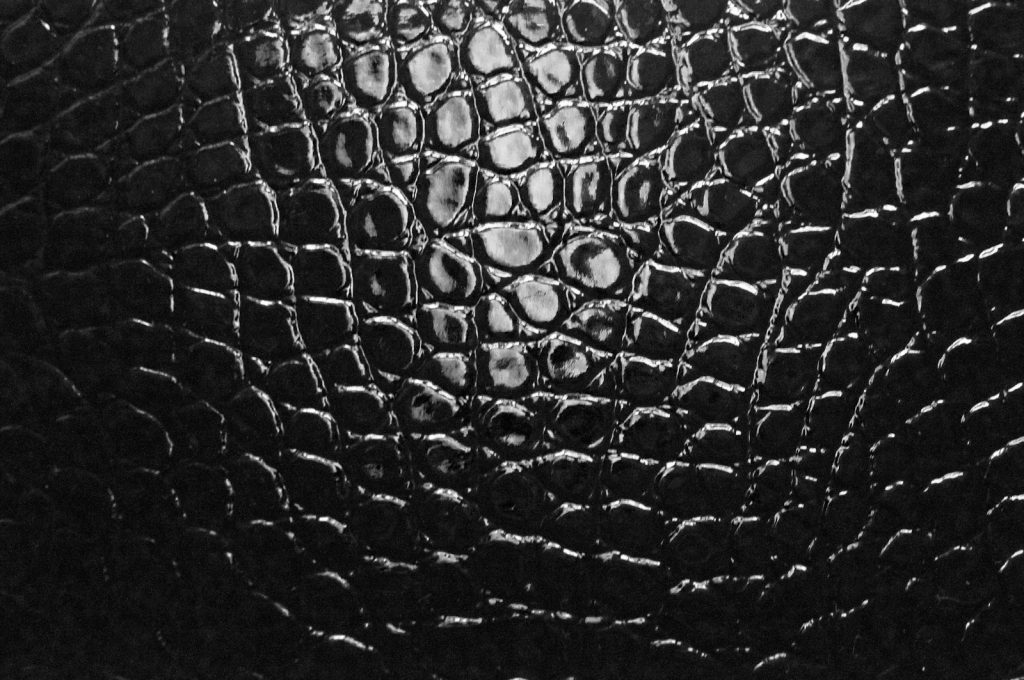
Honest sourcing note: We name every species accurately — saltwater crocodile (Crocodylus porosus), Nile crocodile (C. niloticus), American alligator (Alligator mississippiensis), caiman, reticulated python, monitor/ring lizard, ostrich and stingray — and never sell embossed calf as “exotic”. Most exotic leather is CITES-regulated (commonly Appendix II); legal cross-border trade needs export/import permits and source codes, and buyers are responsible for their country’s rules — this is general information, not legal advice; verify with your CITES Management Authority and customs broker. Prices, MOQ and lead times are indicative ranges (2025–2026), by quote. Luxury houses are referenced only as neutral examples — no affiliation. We are a B2B sourcing desk, not a tannery: we coordinate vetted, CITES-compliant suppliers.
Caiman leather wholesale refers to bulk sourcing of tanned skins from Caiman crocodilus for industrial use in footwear, belts and leathergoods. On this page I explain what caiman is, how it is graded and measured, why it is cheaper than crocodile and alligator, and how Exotic Leather Wholesale coordinates CITES‑compliant caiman supply for B2B buyers.
What is caiman leather in the trade sense?
In the trade, “caiman leather” usually means skins from the spectacled caiman (Caiman crocodilus), a smaller New World crocodilian listed on CITES Appendix II. It is a rigid, bony crocodilian leather with pronounced hornback scales, widely used as the commodity crocodilian in mid‑market boots, belts and small leathergoods.
Compared with Crocodylus porosus (saltwater/porosus crocodile), Crocodylus niloticus (Nile crocodile) and Alligator mississippiensis (American alligator), caiman has:
- Heavier osteoderms (bony plates) – stiffer, more rigid leather.
- More surface defects and scar tissue in lower grades.
- Smaller average usable area per skin.
- Much lower price per square centimetre in comparable grades.
Those are the structural reasons caiman is priced as a commodity crocodilian, not a luxury flagship skin.
Species, origin and honest naming
We are strict on correct species naming. Caiman is not “baby croc”, not “farm gator”, and never embossed bovine. For caiman leather wholesale we work with:
- Spectacled caiman – Caiman crocodilus
CITES Appendix II. Farmed and ranched in several Latin American range states; crust and finished leathers are commonly exported to Asia and Europe for finishing and cutting.
For comparison, other reptiles we routinely specify by scientific name:
- Saltwater crocodile
- Crocodylus porosus, App. II (some populations App. I).
- Nile crocodile
- Crocodylus niloticus, App. II (some populations App. I).
- American alligator
- Alligator mississippiensis, CITES Appendix II (managed under US system).
- Reticulated python
- Malayopython reticulatus, App. II.
- Monitor lizard & ring lizard
- Various Varanus spp., mostly App. II.
- Ostrich
- Struthio camelus, not CITES‑listed.
- Stingray
- Several Dasyatidae species, some App. II.
We never label embossed calf or split leather as “caiman” or “crocodile‑look”. If you want embossed calf for price‑point collections, we will call it exactly that in your specification sheet.
How caiman leather is graded (Grade I–IV)
Caiman is graded on the same basic principles as crocodile and alligator, but buyers need realistic expectations because the species carries more natural defects and rigidity. A typical Grade I–IV scale is:
Grade I – Best available caiman
- Clean central belly or flank area with minimal scars or holes.
- Relatively even colour and finish.
- Still more rigid than Grade I porosus or alligator; tiny defects around edges common.
- Best suited for visible panels on higher‑end boots, mid‑market small leathergoods, some watch straps (careful pattern cutting).
Grade II – Commercial standard
- 1–3 visible scars, healed scratches or small holes in main cutting zone.
- Minor grain irregularities, some unevenness in hornback ridges.
- Typical choice for western boots, belts and wallets at mid‑price points.
- Optimised yield often relies on smart pattern placement rather than truly defect‑free panels.
Grade III – Heavy‑defect, value‑driven
- Multiple scars and defects across the belly or flank.
- Edge damage, brand marks, insect bites more common.
- Suited for smaller parts (belt tips, keepers, pull‑tabs) and cut‑and‑sew techniques that avoid major flaws.
- Attractive for cost‑sensitive collections where “real hornback crocodilian” matters more than perfect cosmetics.
Grade IV – Utility / craft
- Significant holes, deep scars, large damaged areas.
- Used for small craft parts, applique, patches, many defects intentionally left visible as “character”.
- Lowest‑cost way to access genuine caiman for non‑critical applications.
In any RFQ we will ask how you prioritise yield vs cost vs appearance. For caiman hides in bulk, most industrial buyers settle on a Grade II–III mix, with limited Grade I for high‑visibility panels.
Measuring caiman skins: belly width, length and usable area
For consistent manufacturing you must buy caiman on measured metrics, not “small/medium/large”. Our sourcing specs rely on three numbers:
- Belly width (widest point across the belly, in cm).
- Total skin length (snout to tail tip, in cm).
- Usable cutting area (estimated based on your patterns).
Typical caiman size brackets
Indicative ranges for crust or finished caiman for leathergoods:
- 26–30 cm belly: small wallets, cardholders, phone sleeves, watch straps (multi‑piece patterns).
- 30–34 cm belly: belts (spliced), boots (vamps and counters), compact handbags with creative paneling.
- 34–38 cm belly: one‑piece belts (depending on length/placement), western boots, medium bags.
Caiman bellies are shorter and more rigid than porosus or niloticus at the same width. We always check your pattern map before confirming minimum belly width, so you do not over‑spec size and over‑pay on square‑centimetre cost.
Belly‑cut vs back‑cut caiman
Caiman can be cut in two primary ways, and this choice has a major impact on look and usability.
Belly‑cut caiman
Belly‑cut means the primary cutting surface is the smoother belly and flanks, with the hornback ridge on the back kept as a secondary feature.
- Pros: Flatter, easier to stitch and fold; better for wallets, cardholders, some bag panels.
- Cons: Still more rigid than crocodile/alligator; belly scales are smaller and less uniform.
- Typical use: Small leathergoods, dress belts, selected boot vamps.
Back‑cut (hornback) caiman
Back‑cut (often simply called “hornback”) means the raised dorsal scales form the visible surface.
- Pros: Highly textured, aggressive look valued in western boots and casual belts.
- Cons: Very stiff; not suitable for areas requiring folding or high flex point (watch strap fold, wallet spine) unless heavily skived or split.
- Typical use: Western boots, biker and western belts, accent panels on bags.
In RFQs we describe this explicitly as “Caiman crocodilus, hornback (back‑cut)” or “Caiman crocodilus, belly‑cut” to avoid confusion once skins reach your pattern room.
Why caiman is cheaper than crocodile or alligator
Caiman’s price gap to porosus, niloticus and American alligator is structural, not a “discount”. Main factors:
- Bone content: Heavy osteoderms mean more rigid skins, more breakage risk, lower yield for delicate products.
- Skin quality: Farm and habitat conditions typically produce more scars, insect damage and healed defects.
- Size: Average commercial caiman are smaller, limiting single‑panel cutting for large bags.
- Perception: Luxury houses commonly specify porosus, niloticus or American alligator as their main crocodilian lines; caiman is positioned a step down in many brand hierarchies.
For context (indicative only, last verified June 2026), on a per‑skin wholesale basis:
- Mid‑grade caiman typically lands in the low double‑digit USD range per skin for common sizes.
- Mid‑grade Nile crocodile or porosus is usually several times higher per skin of similar belly width.
- American alligator typically prices higher again than most Nile crocodile at comparable sizes and grades.
The exact differential depends on size, grade, finish, tannery, order volume and FX. We only quote specific figures after confirming your spec.
Best uses for caiman in product development
Caiman is not a universal substitute for high‑end crocodile or alligator, but it is an excellent choice in the right product categories.
Footwear – western boots and beyond
- Hornback caiman boots are a classic: the rigid dorsal scales create an aggressive profile valued in western and biker styles.
- Belly caiman boots offer a more understated pattern; still firmer than porosus or alligator but workable with good last engineering.
- We generally advise against using caiman for ultra‑soft, unstructured loafers or sneakers where flex and comfort are critical.
Belts
- Hornback caiman belts deliver visual impact at commodity pricing; edge finishing and lining choice matter to manage stiffness.
- Belly caiman belts can be produced with a cleaner, more formal look, especially in darker uniform colours.
- For one‑piece belt straps, minimum belly width and skin length must be checked against your longest belt size; we routinely map this out in quote discussions.
Small leathergoods (SLG)
- Wallets and cardholders: Belly‑cut caiman works well for exteriors if you accept some stiffness; interiors are usually calf or goat.
- Watch straps: Possible in belly caiman for straight, non‑folded constructions; for highly curved, padded or deployant styles, porosus or alligator remain superior. Our sister site alligatorwatchstrap.com focuses on those species.
- Small accessories (key fobs, money clips, cable ties, card sleeves) are excellent uses for lower‑grade caiman offcuts.
Bags and luggage
- Structured handbags can use caiman panels if the pattern is adapted to size limitations and stiffness.
- Soft, slouchy bags are usually not a good match for caiman; consider Nile, porosus or python instead. Our sister site crocodileleatherbags.com covers those options in finished goods context.
- Caiman works well as trims and contrast panels on calf or canvas bags: handles, flaps, pockets, logo patches.
Caiman skin wholesale: what we actually supply
Exotic Leather Wholesale is a B2B sourcing desk, not a tannery. We coordinate production with vetted, CITES‑compliant partner tanneries and exporters; you deal with a single technical point of contact.
For caiman skin wholesale we typically arrange:
- Species: Caiman crocodilus (spectacled caiman).
- Cuts: Belly‑cut and hornback (back‑cut), whole skins.
- Finishes: Crust (for your own finishing), aniline, semi‑aniline, pigments, basic nubuck; fashion finishes by project.
- Colours: Standard blacks, browns, cognac, rich primary colours; seasonal colours by order.
- Grades: I–IV, or equivalent per tannery system; we translate house grading into a clear defect expectation sheet.
- Preparation: Fully tanned and finished, ready for cutting; we do not ship raw salted skins.
Indicative pricing, MOQs and lead times (caiman hides in bulk)
Because exotic leather markets move with demand, fashion cycles and FX, we only give indicative ranges publicly. All specifics are “by quote” after we understand your spec.
Price ranges (last verified June 2026)
For wholesale caiman hides in bulk (B2B, ex‑tannery or FOB from export hub), current market patterns are:
- Grade II–III, 26–32 cm belly, standard colours: Low to mid double‑digit USD per skin for typical order volumes.
- Grade I, 30–34 cm belly, standard colours: Moderately higher within the double‑digit USD range per skin.
- Special finishes / custom colours: Surcharges apply per colour or per finish, often with higher MOQs.
Actual quotes vary by:
- Grade mix (e.g. 50% GII, 50% GIII vs 100% GII).
- Size distribution (tight size band vs wide mix).
- Finish complexity and colour count.
- Total volume per shipment.
- Export route and freight mode.
Minimum order quantities (MOQs)
Typical MOQs for caiman leather wholesale:
- Standard colours, standard finishes: Often in the low hundreds of skins per colour and finish combination.
- Special colours / finishes: Higher MOQs per colour due to drum loading and finishing efficiencies.
- Mixed‑grade programs: Sometimes allow lower per‑grade MOQs as long as total volume per shipment meets a threshold.
Lead times
Indicative lead times (production only, excluding international shipping and permitting):
- Standard colours, tanneries holding wet blue or crust: Roughly several weeks.
- Custom colours or finishes: Several additional weeks for lab dips, approvals and full‑scale runs.
During peak fashion‑calendar periods, timings can extend. In each quote we will specify a current estimated production window and break out CITES/export document timing separately.
If you want a precise quote for caiman hides in bulk, share your spec and we will revert with a measured offer: plan your trip from initial RFQ to confirmed order via email or WhatsApp coordination.
CITES, legality and documentation for caiman
Caiman crocodilus is normally listed on CITES Appendix II. That allows international trade subject to CITES controls and national regulations. What this means for you as a buyer:
- Export permit: The exporting country must issue a CITES export permit for each shipment.
- Import permit: Some importing countries also require an import permit for Appendix II species; others rely on the export permit alone.
- Source codes: Each shipment is tagged with a CITES source code such as:
- W – Wild.
- R – Ranched (eggs/juveniles taken from the wild, raised in captivity).
- C – Captive‑bred (in line with CITES definitions).
- F – Born in captivity, not meeting strict “C”.
- D – Appendix I bred in captivity for commercial purposes (not typically relevant for caiman, but important for some crocodiles).
- Re‑export permits: If skins move from the country of origin to an intermediate finishing country and then to you, a CITES re‑export permit is usually required.
Our role is to coordinate with compliant partners so that correct CITES documentation accompanies each shipment. However, this is general information, not legal advice. Regulations vary by country and can change. You must confirm requirements with your national CITES Management Authority and your customs broker before committing to a shipment.
How we manage quality for caiman leather wholesale
Caiman’s higher natural defect rate and rigidity mean that basic grading sheets are not enough. Our internal process focuses on:
- Pattern‑driven specs: We ask for your cutting patterns (or at least panel dimensions and critical zones) so we can judge whether a proposed grade/size mix will give you acceptable yield.
- Defect mapping: For new programs, we often request tannery photos or small pilot lots so you can physically see typical defect locations.
- Finish testing: Harder, bonier areas of caiman react differently to finishing than soft belly on porosus/alligator; we stick to proven finishing recipes unless you explicitly want experimental looks.
- Specification sheets: Each PO is tied to a written spec stating species, scientific name, cut, belly width range, finish, colour, grade expectation and documentation requirements.
Caiman vs crocodile vs alligator – practical comparison
This table summarises key differences relevant to sourcing. It is simplified; for a given project we will go into more nuance.
| Aspect | Caiman (Caiman crocodilus) | Nile / Porosus Crocodile (Crocodylus niloticus / porosus) | American Alligator (Alligator mississippiensis) |
|---|---|---|---|
| Typical CITES status | Appendix II | Appendix II (some populations I) | Appendix II |
| Bone content / stiffness | High – very rigid, especially hornback | Medium – flexible with proper tanning | Low – softest among the three |
| Average defects | Higher – more scars and marks | Lower in high‑grade farmed stock | Very low in prime grades |
| Visual appeal | Strong hornback texture, smaller belly scales | Elegant scale layout, popular for bags and SLG | Broad, smooth scales; classic dress look |
| Typical price level | Lowest – commodity crocodilian | High | Highest (for top‑grade, comparable sizes) |
| Best use cases | Western boots, belts, mid‑market SLG | Luxury bags, SLG, shoes | High‑end watch straps, SLG, footwear |
Working with Exotic Leather Wholesale as your caiman leather supplier
As your caiman leather supplier and sourcing desk, our role is to translate product ideas into clear technical orders with tanneries and exporters in Indonesia and other production hubs. We handle:
- Species and cut specification (Caiman crocodilus, belly vs hornback).
- Grade and size band negotiation aligned with your target price and yield.
- Finish and colour development where needed.
- Coordination of CITES paperwork and export documentation with partners.
- Shipment consolidation and sequencing so your factory receives skins in workable batches.
We are independent editors of what we publish: no one can pay to change what we publish; if you proceed with our partner they may pay us a referral fee at no extra cost to you.
To start a structured sourcing conversation or request samples, you can plan your trip with us via email and WhatsApp – share your product sketches, target price bands and timing, and we will propose realistic caiman options.
FAQs: caiman leather wholesale
Caiman vs crocodile: can they be used interchangeably?
No. Caiman (Caiman crocodilus) is stiffer, more defect‑prone and generally smaller than Nile or saltwater crocodile. For rigid products like western boots and structured belts, caiman works well. For soft bags, highly curved watch straps or ultra‑smooth luxury finishes, Nile crocodile, porosus or American alligator are usually better choices.
Why is caiman cheaper than crocodile or alligator?
Caiman is cheaper because of its heavier bone structure, higher incidence of defects, smaller average size and its positioning as a commodity crocodilian. This leads to lower yield and fewer ultra‑high‑end applications, so the market price per square centimetre is significantly below porosus, niloticus or American alligator at similar grades.
What are the best products to make from caiman?
Caiman excels in hornback western boots, structured and casual belts, mid‑market wallets and cardholders, and various small accessories. It is less suitable for soft, unstructured bags and very fine, highly flexible watch straps, where crocodile or alligator outperform it.
Do I need CITES permits to import caiman skins?
In most cases yes. Caiman is typically Appendix II, so a CITES export permit is required from the shipping country, and some importing countries also require an import permit. Re‑exports from finishing countries generally need CITES re‑export permits. This is general information only; you must confirm exact requirements with your national CITES Management Authority and customs broker.
How do I request a quote for caiman hides in bulk?
Send us your target products (boots, belts, SLG), required cut (belly or hornback), belly width band, approximate annual volume, preferred colours and target price level through our plan your trip page. We will follow up by email or WhatsApp to refine the spec and then issue an indicative quote with grade/size/finish clearly defined.