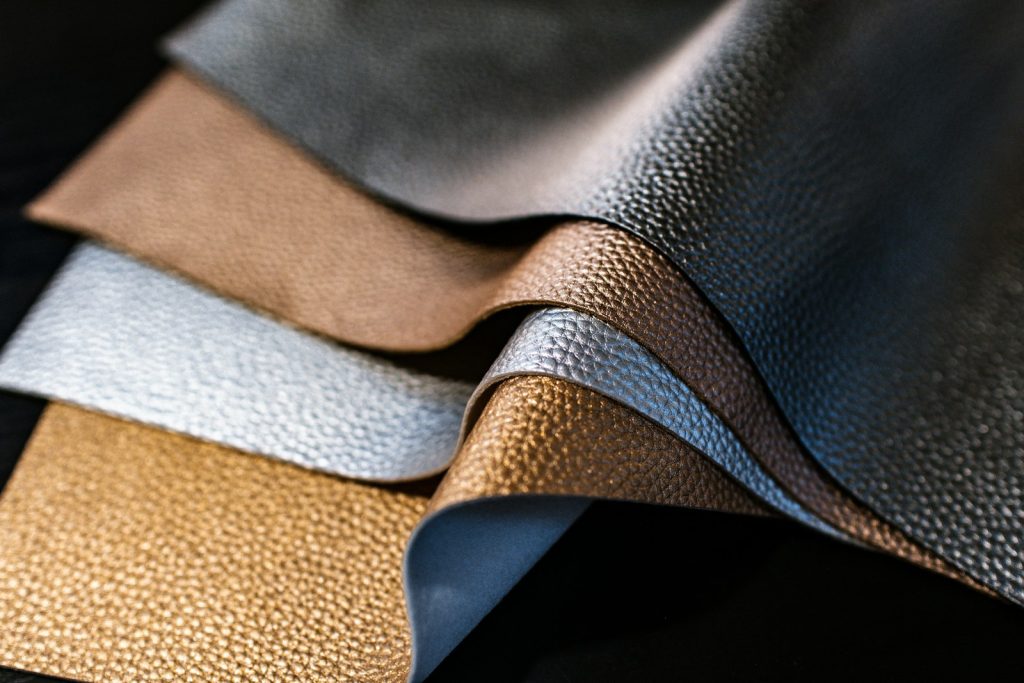
Honest sourcing note: We name every species accurately — saltwater crocodile (Crocodylus porosus), Nile crocodile (C. niloticus), American alligator (Alligator mississippiensis), caiman, reticulated python, monitor/ring lizard, ostrich and stingray — and never sell embossed calf as “exotic”. Most exotic leather is CITES-regulated (commonly Appendix II); legal cross-border trade needs export/import permits and source codes, and buyers are responsible for their country’s rules — this is general information, not legal advice; verify with your CITES Management Authority and customs broker. Prices, MOQ and lead times are indicative ranges (2025–2026), by quote. Luxury houses are referenced only as neutral examples — no affiliation. We are a B2B sourcing desk, not a tannery: we coordinate vetted, CITES-compliant suppliers.
Exotic leather grades are objective quality levels based on visible defects, pattern uniformity, and usable cutting area on a skin. Understanding exotic leather grades I–IV is essential if you want predictable yields and consistent quality from crocodile, python, lizard, ostrich, stingray and other true exotics.
As Lead Editor for Exotic Skins & Grading at Exotic Leather Wholesale, my work is to keep the marketing adjectives out and the measurements, species and grades honest. This page explains how grading actually works in production: which defects matter, how cuts affect yield, and which grades fit which finished products.
Our role at Exotic Leather Wholesale
We are a B2B sourcing desk, not a tannery. We coordinate orders end‑to‑end with vetted, CITES‑compliant partners in Indonesia and abroad, from raw skins through tanning and finishing to export. You get accurate species naming, real grading, and consolidated logistics to your factory or atelier.
All species examples below refer to genuine exotic skins only. Embossed calf or microfiber are not exotic leather and are never sold as such.
—
What Are Exotic Leather Grades I–IV?
Exotic leather grading is a structured way to classify skins based on:
– Location and size of defects
– Uniformity of scales or follicle pattern
– Belly width and usable length
– Overall yield in your prime cutting zone
The most common working scale for crocodilian and many other exotics in Indonesia is:
– Grade I (Grade 1): Virtually clean prime area
– Grade II: Minor defects outside the most critical cuts
– Grade III: Noticeable issues but still good for many applications
– Grade IV and below: Heavy defects; usable only for small pieces/creative use
Grading is done skin‑by‑skin, not by batch. Two skins from the same lot can easily fall into different exotic skin quality grades.
—
How We Inspect and Measure Exotic Skins
Species identification
We always identify and invoice by correct species and scientific name, not just generic “crocodile” or “python”:
– Saltwater crocodile – Crocodylus porosus (“porosus”)
– Nile crocodile – Crocodylus niloticus (“niloticus”)
– American alligator – Alligator mississippiensis
– Caiman – typically Caiman crocodilus fuscus or related Caiman species
– Reticulated python – Malayopython reticulatus
– Monitor lizard – Varanus spp. (commonly Varanus salvator in Indonesia)
– Ring lizard – Varanus spp. with characteristic ring pattern (trade term “ring lizard”)
– Ostrich – Struthio camelus
– Stingray – predominantly Dasyatidae family (often locally called “pari”)
We never relabel lower‑value species as higher‑value (e.g., caiman as alligator, or niloticus as porosus). If a skin cannot be reliably identified, it is not shipped.
Measurements: belly width and usable length
For consistent cutting yields, we measure:
– Belly width (crocodile/alligator/caiman):
– Measured horizontally across the belly at the widest point between the outer edges of the last row of ventral scales.
– Expressed in cm; for example, a 38–40 cm belly niloticus vs a 46–48 cm belly.
– Usable length:
– From the throat area down to a point where the pattern or defects make further cutting uneconomical.
– For python, often measured from just behind the head to the start of the taper where widths become unusable for your article.
These numbers—not marketing labels like “medium” or “large”—determine which silhouettes you can cut and how many.
Back‑cut vs belly‑cut
For elongated species (crocodile, python, lizard), cut type strongly affects grading and yield:
– Back‑cut (dorsal cut):
– The cut is along the spine; you open the back.
– The belly remains intact and flat.
– Preferred where you want clean, flat belly scales or pattern (handbags, straps).
– Belly‑cut (ventral cut):
– The cut is along the belly; you open the ventral side.
– The dorsal scales are intact.
– Used where you want back scales/spines as a feature (boots, some belts, some small leather goods).
Grading always focuses on the “prime area” for that cut. For a back‑cut crocodile, this is the belly. For a belly‑cut python, it is the back pattern.
—
Grade I Exotic Leather (Grade 1): Top Spec Skins
Grade I is the highest commercial grade available for most exotic species. In trade terms, this is “select” or “first grade” – not perfect under a magnifier, but extremely clean in practical manufacturing terms.
Defect tolerance in Grade I
For Grade I crocodilian (porosus, niloticus, American alligator, higher‑quality caiman):
– Prime belly area:
– No open holes, no healed holes.
– No deep scars or cuts.
– No hornback deformities intruding into the belly region.
– Natural, very small imperfections (pin‑like healed marks) may exist but should not affect yield.
– Flanks, throat and tail:
– Minor scars, small insect marks, or tiny healed holes may be accepted if far from your key cutting zone.
– Edge defects that will be trimmed off in normal pattern cutting are tolerated.
For Grade I python (Malayopython reticulatus):
– Pattern line should be consistent along the usable length.
– No large holes or open cuts in the central design area used for bag panels or boots.
– Minor pinholes at edges or outside the key pattern area are accepted.
For Grade I lizard (monitor, ring lizard):
– Uniform scale size and colour across the main cutting area.
– No missing scales or open defects.
– Small, light surface marks at the extreme edges only.
For Grade I ostrich (Struthio camelus):
– Crown (high follicle density area) essentially clean.
– Follicles round and properly developed.
– No large healed cuts across the crown; small superficial marks outside the prime panel can be acceptable.
For Grade I stingray:
– Intact, regular bead pattern.
– Central “eye” area (if present) clean and well‑formed.
– No large bald patches or deep cracks in the main panel area.
Typical applications for Grade I
– High‑end handbags and clutches
– Watch straps (see finished‑goods examples at alligatorwatchstrap.com)
– Premium belts and small leather goods
– Visible upper panels on footwear
– High‑visibility trim on ready‑to‑wear
If you are producing for luxury‑segment clients similar to major European houses (no affiliation claimed), Grade I exotic leather is typically used for your hero pieces and most exposed panels.
Yield and waste
On a properly graded Grade I skin:
– Expect to use most of the prime area for visible cuts.
– Offcuts are mostly from perimeter trims and natural shape, not from defect avoidance.
– Higher raw skin cost is offset by higher usable yield and fewer rejected panels in production.
—
Grade II Exotic Leather: Minor, Manageable Defects
Grade II is the workhorse grade for many manufacturers. These are good skins with small issues that can be worked around.
Defect profile for Grade II
For crocodile/alligator/caiman:
– One or several minor healed scars or small defects that:
– Sit slightly off‑centre in the belly, or
– Sit closer to the throat or tail within the normally used length.
– Defects are usually small enough to:
– Be cut out in gussets, sides, or less visible zones, or
– Sit in areas that will be folded, stitched, or hardware‑covered.
For python:
– Small holes or edge defects that may interrupt parts of the pattern.
– Slight colour variation or dye absorption difference along the length.
– Central design still intact for major panels.
For lizard:
– A few scales slightly distorted or with surface marks in semi‑visible areas.
– Minor colour irregularities across a portion of the skin.
For ostrich:
– Slightly uneven follicle distribution.
– One or two healed marks touching the crown, but not running through the entire usable panel.
Typical applications for Grade II
– Handbag bodies where careful pattern placement is possible
– Belt and strap production with strategic layout
– Footwear uppers (especially models with panel seams and overlays)
– Small leather goods where hardware or pockets can hide minor issues
Many brands use Grade II for a large part of their production and reserve Grade I for the most visible models or colours.
Yield considerations
– Usable area is slightly lower than Grade I because part of your belly or pattern must be avoided.
– A good cutter can still achieve strong yield by planning around defects.
– Price vs yield often makes Grade II very cost‑effective for non‑display‑window SKUs.
—
Grade III Exotic Leather: Workhorse for Footwear and Panels
Grade III skins have noticeable, moderate defects but remain very usable for the right products.
Defect profile for Grade III
For crocodile/alligator/caiman:
– Visible scars or healed holes that may cross central belly zones.
– More pronounced insect damage or marks on flanks and tail.
– Possible irregularities near the edge of the belly.
For python:
– Several holes or cuts that disrupt sections of the pattern.
– Edge tears that reduce usable width.
– More marked colour variation along the length.
For lizard:
– Areas with missing or damaged scales.
– Colour variation more noticeable across the skin.
For ostrich:
– Heavier scarring in parts of the crown.
– More uneven follicle pattern, sometimes with flat patches.
Typical applications for Grade III
– Footwear (vamps, counters, tongues) where seams break up the panel
– Belt inners or lined belts where small defects can be laminated or backed
– Small leather goods (cardholders, key fobs) using selective layout
– Patchwork or panelled bags where pieces can be cut around bad areas
Designers who embrace texture and “story” marks can also use Grade III on visible surfaces, especially for intentionally rugged or distressed looks.
Yield and waste
– Expect higher offcut and waste ratio.
– Pattern‑intensive goods like large, single‑piece tote fronts may be challenging.
– For factories optimised for footwear or small goods, Grade III can be economical, especially at scale.
—
Grade IV and Below: Heavy Defects, Creative Use
Grade IV and lower (often called “IV+” or “utility”) are skins with serious or widespread defects.
Defect profile for Grade IV+
– Large scars, holes, or clusters of defects in the belly or prime area.
– Deformities, deep scratches, or tanning issues that affect structure.
– Major pattern disruptions for python and lizard.
– For ostrich, extensive marking across the crown or clear second‑quality raw selection.
Typical applications for Grade IV+
– Small leather goods: zip pulls, tags, small panels
– Watch strap keepers and small strap segments (if structurally sound)
– Patchwork and quilting designs
– Distressed or “vintage” aesthetics where heavy marking is a feature
– Training or sampling material in factories
If your brand story supports visible “battle scars”, Grade IV can be used creatively. From a purely technical point of view, these are not premium display skins and should be priced accordingly.
—
Species‑Specific Grading: Crocodile, Python, Lizard, Ostrich, Stingray
Crocodile Skin Grading (Porosus, Niloticus, Alligator, Caiman)
For all crocodilian species:
– Belly width (cm) and defect location define price and usability.
– Porosus (Crocodylus porosus) and American alligator (Alligator mississippiensis) generally command higher prices than niloticus or caiman at the same grade and size, due to scale pattern and supply factors.
– Caiman (Caiman crocodilus fuscus) often has more bony structure in the scales, especially on the belly, which influences the product feel and cutting options.
Defects that move a crocodilian skin from Grade I to II or III often include:
– Farming marks from contact with other animals or enclosure fixtures.
– Natural bite scars.
– Processing scratches or minor tanning flaws.
We always specify on RFQs:
– Species and scientific name
– Cut (back‑cut vs belly‑cut)
– Belly width range
– Finish (e.g., classic glazed, matt, nubuck‑type, specialty finishes)
– Target grade range (e.g., Grade I–II mix for handbags)
Python (Malayopython reticulatus)
Reticulated python from Indonesia is widely used for:
– Full‑length boots
– Handbags (central or side panels)
– Ready‑to‑wear trims
– Small leather goods
Grading focuses on:
– Hole count, size, and distribution.
– Edge tears from flaying or tanning.
– Pattern continuity along the length.
Back‑cut pythons show the belly pattern; belly‑cut pythons feature the back pattern. For Grade I–II handbag production, back‑cut Grade I/II is generally preferred for more regular geometry.
Lizard (Monitor and Ring Lizard)
Monitor and ring lizard skins (Varanus spp.) are smaller, so grading is especially critical for watch straps and small goods.
For high‑grade strap production:
– You want consistent scale size along the centreline.
– Defects even 5–10 mm into the prime area can significantly reduce yield.
For larger accessories, Grade II–III may be workable with careful layout.
Ostrich (Struthio camelus)
Ostrich grading pays special attention to the “crown”:
– The area with the densest quill follicles.
– This zone defines your main panels for bags, shoes, and apparel.
Grading tolerances:
– Grade I: Clean crown, minimal marking; off‑crown defects acceptable.
– Grade II: Light marks entering parts of the crown but manageable.
– Grade III: Heavier disruption of the crown.
Ostrich panels for high‑visibility bags and footwear vamps almost always need Grade I–II.
Stingray (Dasyatidae)
Stingray grading is about:
– Completeness of bead coverage.
– Condition of the central “eye” (when present).
– Overall shape and size.
Because bead structure is extremely robust, small visual defects may not affect structural performance but will lower the aesthetic grade.
—
How Grading Impacts Price, MOQ, and Lead Time
All prices and ranges below are indicative only (last verified June 2026) and always confirmed by formal quote. Prices vary by:
– Species and scientific name
– Grade and size (e.g., belly width for crocodile, length for python)
– Finish complexity (simple matt vs multi‑step specialty)
– Order volume and repeat business
– Currency and FX environment at time of order
Indicative wholesale price ranges (2025–2026)
To give you a directional sense only:
– Crocodylus porosus / Alligator mississippiensis:
– Grade I–II handbag‑size bellies can sit in a premium tier per skin, with Grade I commanding a clear premium over Grade II and III.
– Crocodylus niloticus:
– Generally priced below porosus/alligator at the same grade and size; good value in Grade II–III for bags and footwear.
– Caiman (Caiman crocodilus fuscus):
– More accessible entry point to genuine crocodilian; often used in Grade II–IV for footwear and belts.
– Python (Malayopython reticulatus):
– Price strongly influenced by length and finish (basic matt vs complex prints or metallics).
– Lizard / Ostrich / Stingray:
– Each has its own price ladder where Grade I–II carry a premium due to limited usable area.
We do not publish a fixed price database. Instead we quote live each time based on your exact specs.
MOQ and lead time ranges
Indicative, by quote (2025–2026):
– Standard colours/finishes:
– MOQs can start from a modest number of skins per colour for common articles.
– Lead times often range from a few weeks to a couple of months depending on tannery load and seasonality.
– Custom colours/finishes:
– Higher MOQs and longer lead times to cover lab dips, testing and production.
For an accurate quote and timeline, please plan your trip with us via email or WhatsApp. Share your target species, grade, sizes, colours, and approximate volume so we can match you with appropriate CITES‑compliant partners.
—
How Exotic Leather Grades Affect Cutting Yield
Grading is not just about how “nice” a skin looks. It’s about how many usable pieces you can cut.
Prime cutting area vs total area
On a crocodile belly, that might mean:
– A central rectangle where you cut your bag front/back.
– Adjacent bands for handles or flaps.
– Remaining flanks and tail for small goods.
On python, it often means:
– Long central strips for boots or bag panels.
– Secondary zones near the tail for smaller articles.
Practical yield differences by grade
Below is an indicative comparison (actual yields depend on pattern and model):
| Grade | Prime area usability | Typical yield impact | Best suited for |
|---|---|---|---|
| Grade I | 90–100% of prime area usable | Highest yield, minimal defect waste | Visible bag panels, straps, luxury footwear uppers |
| Grade II | 75–90% of prime area usable | Some layout adjustment needed | Handbags with smart cutting, belts, SLG |
| Grade III | 50–75% of prime area usable | Significant planning, more offcuts | Footwear, panelled bags, patchwork |
| Grade IV+ | Below 50% of prime area usable | High waste; used mainly for small cuts | Small goods, trim, experimental designs |
These are general guidelines, not guarantees. Your actual yield must be validated by test cutting on your patterns.
—
CITES and Compliance: Species, Source Codes, Permits
Most of the reptiles mentioned here are listed under CITES (the Convention on International Trade in Endangered Species of Wild Fauna and Flora). This section is general information only and not legal advice. For binding requirements, always check with:
– Your national CITES Management Authority
– Your customs broker or legal counsel
CITES listings and source codes (overview)
– American alligator, many crocodiles and pythons are in Appendix II, with some populations under stricter controls.
– Certain species/populations can be in Appendix I (more restrictive).
– Trade is controlled via CITES permits and source codes such as:
– W – Wild
– R – Ranched
– C – Captive‑bred
– F – Captive‑born (first‑generation)
– D – Appendix I animals bred for commercial purposes under an approved program
Your import/export combination (e.g., Indonesia to EU, or Indonesia to USA) determines which documents are required.
Our role in CITES‑compliant sourcing
– We coordinate with Indonesian and partner‑country tanneries that operate within their national CITES frameworks.
– Skins are shipped with supporting export CITES (and re‑export CITES where applicable) based on correct species and source.
– You are responsible for:
– Securing import permits where required.
– Ensuring your company details and HS codes are correct.
– Complying with domestic regulations (e.g., US Lacey Act, EU wildlife trade rules).
We strongly recommend that every buyer verify requirements directly with their CITES Management Authority and customs broker before placing orders.
—
Choosing the Right Exotic Leather Grade for Your Product Line
Selecting the right grade is a cost–performance decision, not a simple “higher is better” rule.
Handbags and SLG
– Hero handbags (front/back panels highly visible):
– Typically Grade I or top‑end Grade II.
– Everyday bags, small leather goods:
– Grade II often balances cost and yield.
– Grade III can be used for interior parts or structured pieces where defects are hidden.
Footwear
– Dress shoes and visible vamps:
– Grade I–II; avoid major scars that run across the toe.
– Panelled sneakers, boots with overlays:
– Grade II–III can work with good design and layout.
– Interior counters or heel pieces:
– Grade III–IV if structurally sound.
Watch straps and small trim
– Watch straps:
– Grade I–II for the visible long piece; Grade II–III can sometimes be used for shorter keepers.
– Small trim (tabs, pullers):
– Grade III–IV depending on your brand aesthetic.
Sampling vs production
– First prototypes:
– You may use mixed grades to test patterns and shapes cost‑effectively.
– Final sales samples and production:
– Should match the target grade mix you intend to sell, to avoid surprises in appearance or yield.
For project‑specific advice, send us your sketches or tech packs via plan your trip and we can discuss grade and species options over email or WhatsApp.
—
How Exotic Leather Wholesale Works With You
We sit between your product team and a network of CITES‑compliant tanneries and finishers in Indonesia and partner countries.
Our B2B sourcing process
1. Requirement intake
– Species and scientific name
– Target grades and size ranges (e.g., 36–40 cm niloticus Grade I–II matt)
– Finish and colour concepts
– Approximate volume and delivery window
– Destination country for CITES/logistics planning
2. Technical guidance
– Advise on realistic grade mixes for your budget.
– Flag yield and cutting implications.
– Suggest species alternatives where appropriate (e.g., niloticus vs caiman for specific articles).
3. Quotation and sampling
– Provide indicative 2025–2026 ranges and then specific quotes.
– Arrange sampling where necessary (paid samples, credited against orders in some cases, by agreement).
4. Production coordination
– Align tanning/finishing schedules.
– Consolidate grades and colours according to your PO.
– Pre‑check grading and measurement on representative lots.
5. Logistics and documentation
– Coordinate CITES export permits and other local documentation with the tannery/exporter.
– Work with your nominated forwarder or support you in finding one.
– Maintain traceability: species, country of origin, and source codes.
We maintain editorial independence in what we publish; no one can pay to change our grading explanations or species descriptions. If you proceed with one of our sourcing partners, they may pay us a referral fee at no extra cost to you.
—
Summary: Using Grades I–IV to Build Reliable Exotic Programs
Understanding exotic leather grades is the foundation for building a stable exotic program. Grade I–II are your tools for precise, high‑visibility luxury goods; Grade III–IV support footwear, panelled pieces and creative applications.
The more specific you can be on species, grade, size and usage, the better we can help you engineer both cost and quality from Indonesia’s tanneries to your atelier.
To discuss a live project in crocodile, python, lizard, ostrich or stingray, plan your trip with our team. Share your brief and we can continue the conversation over email and WhatsApp with concrete options and indicative 2025–2026 ranges.
—
FAQs on Exotic Leather Grades
What is Grade I exotic leather?
Grade I exotic leather is the highest commercial quality level, where the prime cutting area (belly for crocodilian, crown for ostrich, central pattern for python and lizard) is essentially free of major defects. Minor natural marks may exist at the edges or in non-critical zones, but they do not compromise yield for high-visibility cuts like bag fronts, watch straps, or footwear uppers.
How do exotic leather grades affect price?
Price typically rises with grade because higher grades offer larger clean areas and better yield. For the same species, size and finish, Grade I is usually the most expensive, followed by Grade II, with Grade III and IV priced lower. However, your effective cost per finished piece depends on yield: a higher-priced Grade I skin may produce more clean panels and therefore lower cost per unit than a cheaper but heavily defective Grade III skin.
How much extra waste should I expect with lower grades?
Compared with Grade I, Grade II usually adds only modest extra waste if your cutter is experienced, while Grade III can significantly increase offcuts because more defects sit in the prime area. Grade IV and below are often only economical for small parts or patchwork. Actual waste depends on your patterns and tolerance for visible marks, so test cutting on a few skins is advisable before committing to large volumes.
Which exotic leather grade should I use for handbags?
For handbags with large, visible panels, Grade I or top-range Grade II is recommended, especially in crocodile, alligator, and ostrich. Grade II can work very well when patterns are carefully placed around small off-centre defects. Grade III may be used for internal components, small pockets, or heavily panelled designs, but is rarely suitable for large, uninterrupted front panels in the luxury segment.
Is this CITES information legal advice for importing skins?
No. Our CITES information is a general overview only and not legal advice. Actual requirements depend on your species, source code, origin and destination countries, and any national or regional rules that apply. Always confirm with your national CITES Management Authority and customs broker before ordering, and ensure you obtain all required export, import and (where relevant) re-export permits.