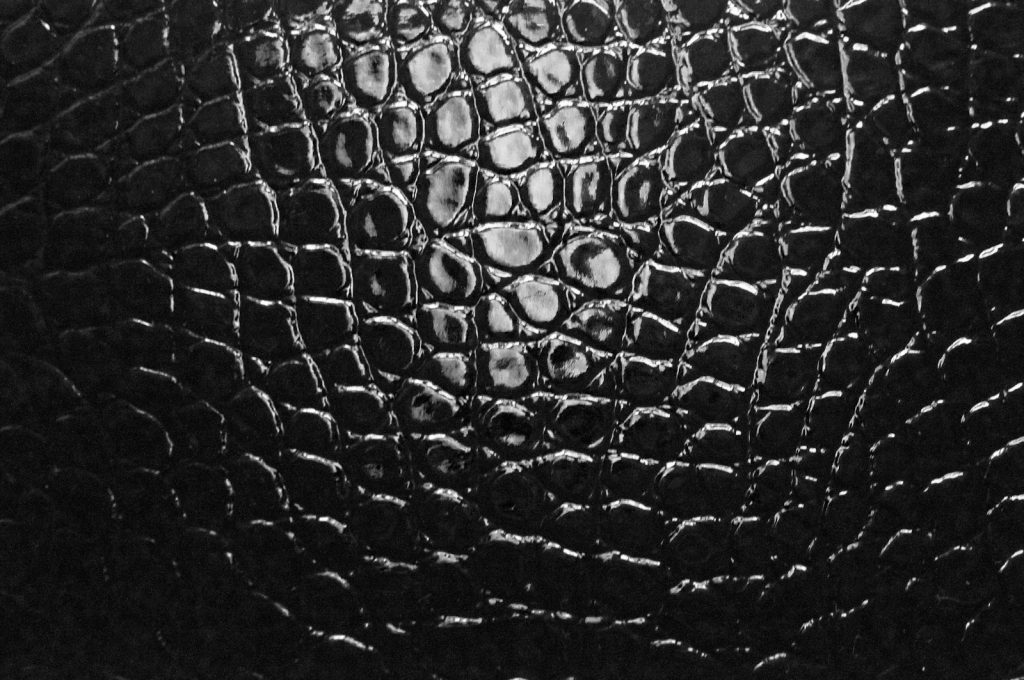
Honest sourcing note: We name every species accurately — saltwater crocodile (Crocodylus porosus), Nile crocodile (C. niloticus), American alligator (Alligator mississippiensis), caiman, reticulated python, monitor/ring lizard, ostrich and stingray — and never sell embossed calf as “exotic”. Most exotic leather is CITES-regulated (commonly Appendix II); legal cross-border trade needs export/import permits and source codes, and buyers are responsible for their country’s rules — this is general information, not legal advice; verify with your CITES Management Authority and customs broker. Prices, MOQ and lead times are indicative ranges (2025–2026), by quote. Luxury houses are referenced only as neutral examples — no affiliation. We are a B2B sourcing desk, not a tannery: we coordinate vetted, CITES-compliant suppliers.
Python skin wholesale means buying reticulated python (Malayopython reticulatus) skins in bulk, graded, measured, CITES-documented and tanned for industrial use. On this page we set out how the reticulated python skin wholesale trade works from Indonesia’s tanneries to your workshop, with realistic grades, lengths, price ranges and documentation.
What is reticulated python skin wholesale?
Reticulated python skin wholesale is the B2B trade of large-format reptile skins from Malayopython reticulatus, primarily from Southeast Asia under CITES Appendix II. Skins are collected, tanned in volume (typically in Indonesia), graded, measured by length and width, then sold in bundles or lots to brands, component makers and specialist ateliers worldwide.
As a python leather supplier, Exotic Leather Wholesale does not tan or farm directly. We source through vetted, CITES-compliant Indonesian partners, match their production to your specification, and coordinate export, documentation and logistics. You receive traceable python hides in bulk — raw, wet-blue, crust or finished — to your required finish and MOQ.
Species, origin and CITES status
In the trade, “python” can mean several species. For clarity, this page is strictly about reticulated python:
- Common name
- Reticulated python
- Scientific name
- Malayopython reticulatus
- CITES status
- Appendix II (controlled international trade)
- Main range for skin trade
- Indonesia, Malaysia, parts of mainland Southeast Asia
- Typical tanned length bands
- 2.5–4.5 m measured along the dorsal line
Indonesia is one of the leading exporters of reticulated python skins, both semi-finished (crust, wet-blue) and finished fashion leathers. Most of the volume in fashion and leathergoods — from entry-level belts to small leather goods for luxury houses — is reticulated python from this region.
Under CITES Appendix II, international trade is allowed but controlled via permits and quotas. For python, the usual source codes on CITES export permits are:
- W – Wild
- R – Ranched (taken from the wild, reared in a controlled environment)
- C – Bred in captivity
In practice, much of the Indonesian volume is coded W or R. We will state the declared source code when we quote, but it remains your responsibility to confirm acceptability with your CITES Management Authority and customers.
Back-cut vs belly-cut python skins
For reticulated python skin wholesale, the cut is as important as the species. It determines scale layout, usable area and typical end use.
Back-cut python
Back-cut skins are opened along the dorsal (back) side so the belly scales are intact and centred. Characteristics:
- Visual: Wide, regular belly scales running down the middle, popular for belts, straps and panels where the belly is the show surface.
- Usable area: Cleaner central area, less tapering than belly-cut for many applications.
- Common uses: Belts, watch straps, bag panels, small leather goods, footwear vamp/quarter pieces.
Belly-cut python
Belly-cut skins are opened along the belly so the back (net pattern) spreads out.
- Visual: The characteristic reticulated pattern appears across the central area, belly scales are split.
- Usable area: Suited to larger panels and where the net pattern is desired.
- Common uses: Ready-to-wear trims, bag bodies, larger footwear components, textiles-style applications.
| Aspect | Back-cut reticulated python | Belly-cut reticulated python |
|---|---|---|
| Main visual focus | Full belly scales centred | Reticulated back pattern |
| Typical uses | Belts, straps, SLG, small panels | Bags, RTW trims, larger panels |
| Pattern symmetry | Strong central line, good for mirror pairs | More diffuse; better for all-over coverage |
| Price (like-for-like) | Broadly similar; driven more by grade/length | Broadly similar; driven more by grade/length |
Most python leather supplier inventories separate back-cut and belly-cut stock. If you are not yet sure which you need, share sketches or reference photos with your RFQ and we will suggest an appropriate cut and length band.
Length bands, widths and how python skins are measured
Python hides in bulk are priced and sorted by length band and grade. For reticulated python from Indonesia, common commercial length bands (tanned, lightly trimmed) are:
- 2.5–2.9 m
- 3.0–3.4 m
- 3.5–3.9 m
- 4.0–4.5 m
Measurement conventions you should be aware of:
- Length: Measured along the dorsal line from neck to tail tip after tanning and trimming.
- Width: Typically taken at the widest usable belly area (for back-cut) or across the widest central section (for belly-cut). Width is less standardized than length but matters for patterns like wide belts or bag gussets.
- Usable area: For pattern cutting, account for tapering towards tail and some trimming loss at head/tail.
Reticulated pythons are large snakes; long lengths are common. For many belt and strap programs, 3.0–3.4 m skins are economical. For large bags and RTW applications, buyers often request mixes of 3.5–4.5 m skins for layout flexibility.
Grades: what Grade I–II python actually looks like
Grades in python skin wholesale are not fully standardized across the industry, but Indonesian and European tanneries broadly use:
- Grade I (First): Clean belly (or back, depending on cut) with minimal defects, no significant holes, scars, or large-scale lifting in the prime cutting area. Small natural marks at head/tail margins are allowed.
- Grade II (Second): Minor defects in the main area — small healed scars, small holes near the edge, slight scale lift or pattern irregularity — but still fully usable for most premium products.
- Lower grades (III and below): More pronounced defects, often used for smaller components, patchwork, or heavy finishing (e.g., dark colours, strong embossing) to mask imperfections.
Indicative wholesale price ranges like USD 40–120/skin (see below) usually refer to Grade I–II tanned skins in standard fashion finishes in common length bands. Rare colours, special finishes or very long, clean skins can sit above that range.
Trade forms: raw, wet-blue, crust and finished python
Like crocodilian and other reptile leathers, python moves through the supply chain in several possible forms. Your place in the value chain will determine what you buy.
Raw salted python skins
- Description: Freshly flayed, fleshed and preserved with salt. Not tanned.
- Buyers: Tanners and a few large converters only; most brands do not buy raw.
- Pros: Lowest material cost per metre of eventual output.
- Cons: High shrinkage risk, quality variance, need for strong QC and established tannery process. CITES export still applies.
Wet-blue python
- Description: Chrome-tanned, wet state, typically blue-tinted; undeveloped crust.
- Buyers: Tanners and finishers that want to control re-tannage and finishing close to their market.
- Use case: More common in crocodile and caiman than python, but some volume moves as wet-blue where brands have preferred finishing partners.
Crust python
- Description: Fully tanned, dried, with some retannage and fatliquoring but no final colour/topcoat.
- Buyers: Brands or convertors who want to maintain finishing flexibility (colours, effects) closer to their manufacturing hub.
- Pros: Lower shipping weight, finish flexibility, longer storage stability than wet-blue.
- Cons: Requires finishing expertise; yield can be affected by how crust handles finishing and plating.
Finished python leather
- Description: Dyeing, finishing and plating completed at the tannery. Supplied ready for cutting after conditioning.
- Buyers: Most handbag, footwear, watch strap and SLG makers.
- Typical finishes: Aniline, semi-aniline, matte, gloss, pearlescent, foiled, printed, antiqued, and fashion specials such as metallics.
Exotic Leather Wholesale focuses primarily on crust and finished python skins, which align best with needs from small ateliers through to industrial component makers.
Indicative wholesale prices for reticulated python skins
Wholesale prices for reticulated python depend on species, length, grade, finish, volume and currency. For Indonesian reticulated python (Malayopython reticulatus) tanned in fashion grades, indicative 2025–2026 ranges (last verified June 2026) for back-cut or belly-cut are:
- Grade I–II, 2.5–2.9 m, standard colours: roughly USD 40–70/skin on wholesale orders.
- Grade I–II, 3.0–3.9 m, standard colours: roughly USD 60–100/skin.
- Grade I–II, 4.0–4.5 m, standard colours: roughly USD 80–120/skin.
These are indicative wholesale ranges only, not a public price list. Actual quotes vary by:
- Finish complexity (e.g., basic aniline vs multi-layer metallic or print).
- Order volume (python hides bulk programs will price differently from 10-skin sample lots).
- Colour development (standard colour card vs custom lab dips).
- Length mix and grade tolerance.
- FX and freight arrangements (FOB Indonesia vs landed in your hub).
We will confirm current pricing case-by-case via RFQ and clearly state what is included (trade term, documentation handling, packing assumptions). If you need sample-level quantities, we can usually aggregate across clients to keep unit economics reasonable.
MOQ, lead times and production planning
For python skin wholesale from Indonesian tanneries, realistic MOQs and timelines are as important as price.
MOQ ranges
Indicative 2025–2026 MOQs (subject to tannery confirmation at the time of RFQ):
- Standard colours from existing production: Often from 10–20 skins per colour/cut/length band, especially if taken from ongoing runs.
- Standard card colours as new production: Commonly 30–50 skins per colour, cut and finish.
- Custom colours/finishes: Typically 60–100 skins per colour/finish combination, sometimes negotiable if aligned with other orders.
Smaller ateliers can often meet MOQs by standardizing on 1–2 colours and accepting a mix of length bands within a range (e.g., 3.0–3.9 m). For industrial buyers, python hides bulk programs in the hundreds or thousands of skins benefit from tighter grading and colour consistency.
Lead times
Lead times depend on stock vs production, finish complexity and the CITES permit process. Indicative ranges:
- In-stock finished skins: 1–3 weeks to pack, obtain CITES export permit and ship after payment and paperwork confirmation.
- Standard colour production: 6–10 weeks for tanning/finishing plus 2–4 weeks for CITES export permitting and logistics coordination.
- Custom finish development: 8–14 weeks including lab dips, approvals and production, plus permitting.
CITES permit timelines vary by exporting and importing country. For planning purposes, allow a buffer on your production calendar. We can share typical recent permit processing times, but these are not guaranteed and should be verified with your CITES Management Authority and customs broker.
Indonesia vs Europe vs Singapore: tanning capability
In python leather, the location of tanning and finishing influences cost, lead time, finish vocabulary and QC protocols.
Indonesia (Java-centric)
- Position: High-volume source and processing hub for reticulated python.
- Strengths: Competitive pricing, proximity to raw material, considerable experience in standard fashion finishes and colours used by many global brands.
- Considerations: QC and grading can vary by tannery. Working through a sourcing desk with on-the-ground understanding helps align expectations and inspection.
France and Italy
- Position: Specialist finishing centres, traditionally tied to European luxury leathergoods and footwear.
- Strengths: Very refined fashion finishing, intricate colour effects, strong consistency for repeat programs, integration with European manufacturing ecosystems.
- Considerations: Higher cost base; often work on imported wet-blue/crust from Asia or other sources; longer overall chain for raw material.
Singapore and regional finishing hubs
- Position: Niche role in exotic leather logistics, trading and some finishing; also acts as a routing hub for shipments.
- Strengths: Logistical efficiency, financial services, and sometimes specialized finishing runs.
- Considerations: Tends to focus on specific added-value stages rather than full-chain high-volume tanning.
For most reticulated python skin wholesale programs using Southeast Asian raw material, Indonesian tanning and finishing is commercially efficient. For very specialized colour signatures or where production is tightly integrated with European plants, some buyers commission part of the process in France or Italy using imported crust.
Who buys reticulated python skins — and for what?
Across the trade, reticulated python is used in:
- Watch straps: Belly-scale back-cut skins for both mass and high-end straps; some luxury watch houses use python as fashion capsule material. Our sister site alligatorwatchstrap.com focuses on alligator straps but many strap makers cross-source python.
- Handbags and SLG: From fashion labels to niche ateliers, belly-cut and back-cut python are used for panels, gussets, trims and entire bag bodies.
- Footwear: Uppers, quarters, trims for both sneakers and formal footwear.
- Ready-to-wear and accessories: Trims, appliqués, collars, belts, small accessories.
- Tech and lifestyle goods: Phone cases, headphones trims, small cases and covers.
Luxury houses, premium fashion brands, and OEM suppliers use python as one component in broader exotic and non-exotic programs. Reference to such houses here is purely descriptive; it is not an indication of any relationship or endorsement.
CITES and python skins: what you must know
All reticulated python skins crossing international borders must comply with CITES and national wildlife laws. This section is general information only, not legal advice. You must confirm requirements with your CITES Management Authority and your customs broker.
Key CITES points for Malayopython reticulatus
- Appendix II: International trade allowed subject to non-detriment findings and permits.
- Export permits: Issued by the exporting country (e.g., Indonesia) CITES Management Authority, referencing species, quantity, source code (W/R/C), and description (raw, tanned, finished etc.).
- Re-export permits: Required when skins are shipped from a country that previously imported them (e.g., tanned in one country, re-exported to another).
- Import requirements: Vary by jurisdiction; some countries require import permits for certain Appendix II species beyond CITES baseline.
Documentation we coordinate
Through our CITES-compliant partners we coordinate:
- CITES export or re-export permit applications for the skins in your order.
- Commercial invoices with correct species and scientific names (e.g., “Reticulated python, Malayopython reticulatus”).
- Packing lists and HS codes aligned with product form (tanned skins, finished leather, etc.).
However, final responsibility to ensure legality of import and use in your jurisdiction rests with you. Regulations can change; always verify with your CITES Management Authority and customs broker before committing to a purchase or production schedule.
Exotic Leather Wholesale’s role: sourcing desk, not tannery
Exotic Leather Wholesale is a B2B sourcing desk focused on honest, CITES-compliant exotic leather supply. We are not a tannery or farm; instead we:
- Work with vetted Indonesian and other regional tanneries with proven CITES compliance for reticulated python and other species.
- Translate your design and technical requirements into the tannery’s language of length bands, grades, finishes and feasible MOQs.
- Coordinate sampling, approvals, production slots, QC checks and export documentation.
- Support you with adjacent product sourcing where necessary (e.g., lining leathers, cut components via partners).
No one can pay to change what we publish; if you proceed with our partner they may pay us a referral fee at no extra cost to you. Our focus is long-term, repeatable supply rather than single-shipment arbitrage.
If you are planning a python program and need to align design, MOQ and cost, you can plan your trip through the supply chain with us — including WhatsApp-based back-and-forth for rapid sampling decisions, photos and grading discussions.
How a python skin wholesale project typically runs
For transparency, a typical reticulated python sourcing project with us goes through these stages:
1. RFQ and technical brief
- You share: intended product (bags, straps, footwear etc.), visual references, tolerances for grade, preferred cut (back/belly), colour direction, volume projections, delivery window and destination.
- We respond with: indicative options (stock vs production), draft MOQ and price ranges, and questions on critical measurements (e.g., belt length requirements, strap widths).
2. Sampling and colour approval
- For stock colours: we propose existing lots and send photos/video of actual skins; physical samples can be shipped subject to CITES requirements.
- For custom colours: we brief partner tanneries for lab dips or small test runs; you review and approve before bulk production.
3. Production and QC
- On order confirmation and deposit, skins enter or join production.
- We monitor grade/length mix against spec and share mid-production updates as appropriate (especially on colour-sensitive projects).
4. Permits, packing and shipment
- We coordinate CITES export permit applications and any pre-shipment inspections required locally.
- Skins are counted, bundled by length and grade, and packed according to your freight mode (air vs sea, courier vs cargo).
- Upon permit issuance and balance payment, shipment is dispatched; you and your broker receive document scans in advance.
5. Post-arrival support
- If any variance on grade mix or obvious defects vs spec are found, we work with tannery and you on pragmatic resolution.
- For repeat programs, we refine specs and grading tolerances based on your cutting-room feedback.
Python vs other exotic leathers
Many buyers source multiple exotic species. Each has its place:
- Saltwater crocodile (Crocodylus porosus) and Nile crocodile (Crocodylus niloticus): Used for high-end structured bags and watch straps where belly tile geometry and prestige are key.
- American alligator (Alligator mississippiensis): Favoured for very high-end watch straps and leathergoods; focus of our sister site alligatorwatchstrap.com.
- Caiman crocodilus: More accessible price point; heavier bone structure and less flexible than porosus/niloticus/alligator.
- Monitor and ring lizard: Small-scale pattern, fine grain, good for SLG and trims.
- Ostrich: Quill pattern, supple; widely used in bags, footwear and auto interiors.
- Stingray: Very abrasion-resistant, granular appearance; commonly used for belts and wallets.
Python sits in the middle of this matrix: large format, visually bold scales, moderate-to-high flexibility, and a price point generally below crocodile/alligator but above most embossed calf. We never call embossed calf “exotic”; all species are clearly named and documented.
Start a reticulated python sourcing brief
If you are planning a new python capsule, updating a core line, or relocating production to Southeast Asia, a structured brief will shorten sampling time and reduce cost. Share your basic requirements — target retail segment, intended products, expected annual volume, and markets — and we can propose feasible mixes of grade, length and finish.
You can plan your trip through the Indonesia-to-atelier supply chain with us, and continue the discussion over WhatsApp for faster pattern photos, grading clarifications and permit-timing updates.
FAQs on python skin wholesale
What is the difference between back-cut and belly-cut python for my product?
Back-cut keeps the belly scales intact and centred, ideal for belts, straps and small panels where you want the regular belly pattern. Belly-cut opens the belly, exposing the net-like back pattern, better for larger bag panels and RTW trims. Functionally both are comparable; the choice is mostly visual and pattern-driven.
How much does a reticulated python skin cost wholesale?
Indicatively for 2025–2026 (last verified June 2026), finished Grade I–II Indonesian reticulated python in common length bands is roughly USD 40–120 per skin depending on length, finish and volume. Shorter, standard-finish skins are toward the lower end; longer or more complex finishes trend higher. Exact pricing is by quote.
What length python skins do I need for belts and watch straps?
For belts, 3.0–3.4 m back-cut skins usually give efficient yield for mainstream belt sizes with grading across head to tail. For watch straps, shorter skins (2.5–2.9 m) can be very economical, as straps use relatively small sections; many strap makers buy mixed bands as long as the belly area is clean and wide enough for their largest lug width.
Do I need CITES permits to import python leather?
Yes, reticulated python (Malayopython reticulatus) is on CITES Appendix II, so international shipments require a valid CITES export (or re-export) permit at minimum, plus any import permits required by your country. Requirements vary by jurisdiction and can change; check with your CITES Management Authority and customs broker. Our partners handle export permits; you remain responsible for import compliance.
Can you supply other exotics alongside python in one shipment?
Often yes, if species, documentation and logistics align. Many clients consolidate python with crocodile, lizard, ostrich or stingray from compatible origins. Each species must be declared correctly with its own CITES documentation where required. We will advise what can be ethically and legally combined for your specific route and help structure the shipment accordingly.