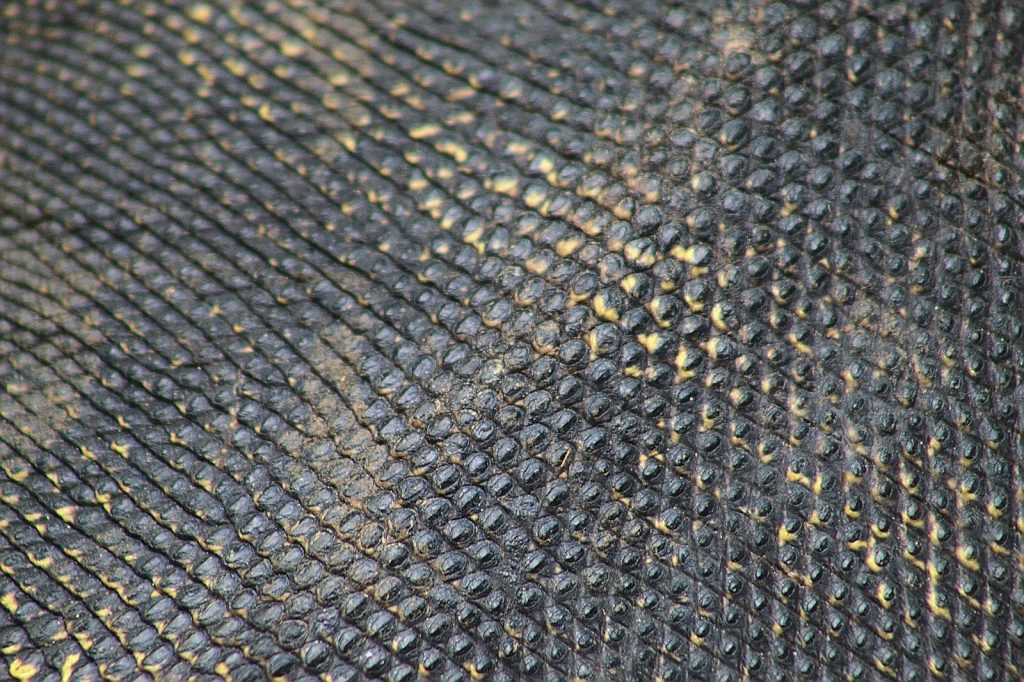
Honest sourcing note: We name every species accurately — saltwater crocodile (Crocodylus porosus), Nile crocodile (C. niloticus), American alligator (Alligator mississippiensis), caiman, reticulated python, monitor/ring lizard, ostrich and stingray — and never sell embossed calf as “exotic”. Most exotic leather is CITES-regulated (commonly Appendix II); legal cross-border trade needs export/import permits and source codes, and buyers are responsible for their country’s rules — this is general information, not legal advice; verify with your CITES Management Authority and customs broker. Prices, MOQ and lead times are indicative ranges (2025–2026), by quote. Luxury houses are referenced only as neutral examples — no affiliation. We are a B2B sourcing desk, not a tannery: we coordinate vetted, CITES-compliant suppliers.
Stingray leather wholesale supply is built around small, hard-grained skins with a distinctive pearl center, tanned and finished for wallets, belts, boots and small leather goods. On this page we cover how shagreen (stingray leather) is graded, priced, finished and moved from Indonesian tanneries and regional hubs to your workshop or factory.
What is stingray leather (shagreen)?
In the modern trade, “stingray leather” or “shagreen” usually refers to the tanned skins of various marine rays, most commonly from the family Dasyatidae (e.g. Dasyatis spp. and closely related genera). The defining feature is the dense layer of calcified granules (“pearls”) on the grain side that polish into a highly abrasion-resistant surface.
Historically, “shagreen” has been used more loosely, sometimes for shark or even embossed calf. We use the term only for genuine ray skins. We never call embossed bovine “exotic”.
Species, origin and CITES context
Commercial stingray leather today is dominated by non-CITES-listed coastal ray species harvested as by-product from food fisheries across Asia. In Southeast Asia, common trade species include various whiprays and stingrays in the genera Himantura, Neotrygon and related Dasyatidae, sold under generic “stingray” descriptions.
Most bulk stingray leather in wallets and belts comes from:
- Indonesia (Java and surrounding islands)
- Thailand
- Vietnam
- China (both local catch and imported wet-blue/crust for finishing)
As of the latest widely available listings, the main stingray species used in commodity leather are not individually listed on CITES Appendices. However, elasmobranch regulations evolve, and some rays and sharks are Appendix II-listed. We treat CITES and wildlife law as operational constraints, not marketing slogans.
Important: Any CITES discussion here is general information, not legal advice. Before you buy or ship, always confirm requirements with your national CITES Management Authority, your customs broker and, where relevant, your logistics provider. For non-listed stingray, you typically deal with standard fishery and customs rules rather than CITES permits, but you still remain responsible for compliance in your jurisdiction.
How stingray leather is measured, graded and priced
Stingray skins trade very differently from crocodile, alligator, python or ostrich. Understanding those differences is essential for realistic costing and design work.
Measurements: cm length, cm width, useful cutting area
Stingray leather is usually sold per skin, quoted by approximate length and width, not by square foot. Typical usable sizes after tanning:
- Length: ~30–40 cm for small skins, 40–60+ cm for larger skins
- Width: ~20–40 cm across the widest section
- Effective panel area: concentrated around the central “eye” (white pearl) where the grain and pearl pattern are most uniform
Because the tail and edges are waste for most applications, designs are planned around the central 15–25 cm wide zone. Larger sizes matter mainly if you need long belt straps or boot shafts cut on the cleanest area.
Grading: A, B, C and “craft” grades
Unlike crocodilian skins with highly codified A/B/C grades tied to belly width, stingray grading is more tannery-specific. Still, export-standard tanneries in Indonesia and surrounding hubs tend to converge on four broad commercial grades:
- Grade A: Full, clean pearl field, centered “eye”, minimal scars or butcher cuts on the main panel. Suitable for high-end wallets, belts, small leather goods and visible boot vamps.
- Grade B: Minor defects (small scars, slightly off-center eye, variation in pearl density). Typically acceptable for mid-range SLG, belt backs, cardholders and panels where minor defects can be placed out of sight.
- Grade C: More visible defects, uneven pearl fields, healed scars, heavier tail damage. Often used for lower-priced belts, interiors, or where cutting can avoid worst areas.
- Craft / seconds: For hobby and craft markets: heavy defects, irregular shapes, experiments in finishing. Usually not suited to brand production runs.
We will always state the grading convention the tannery uses and, where necessary, translate it into the practical impact on your cutting yield.
Indicative wholesale pricing: 2025–2026 ranges
For B2B orders out of Indonesian and regional tanneries, last verified June 2026, indicative FOB or ex-warehouse ranges for finished stingray skins typically sit around:
- Basic finished stingray (matte or semi-gloss, single colour), Grade B–C, small/medium size: roughly USD 20–35 per skin at modest MOQs.
- Higher grade (A–select), polished stingray leather with uniform finish, larger sizes: roughly USD 35–60 per skin.
- Specialty finishes (two-tone, metallic, deep gloss, custom colours) or tight QC for branded programmes: roughly USD 50–80 per skin, depending on size, grade, colour tolerance and volume.
These numbers are indicative only and vary with grade, size, finish complexity, order quantity, tannery schedule and FX (IDR, THB, CNY vs USD/EUR). There is no public price database. We quote live once we know your spec.
For STL (shipped-to-landed) cost planning, allow for freight, insurance, import duties, possible handling for fishery products, and your internal overheads. For non-listed stingray, there are usually no CITES permit fees, but import VAT and duties often apply.
Key stingray finishes: from matte shagreen to high-gloss pearl panels
Because stingray’s grain is so hard, finishing is a technical process. Your choice of finish has direct impact on cost, yield and suitability for your end product.
Classic polished stingray leather
This is the archetypal stingray look: a dense field of small, polished pearls, often with a brighter central “eye” oval. Features:
- Finish: The outer granules are ground and polished to a flat, glassy surface, then pigmented or dyed.
- Handfeel: Very hard, almost enamel-like. Minimal flex compared to calf or goatskin.
- Use-cases: Wallet exteriors, cardholder fronts, belt faces, boot vamps, accent panels on bags and watch straps (usually only as small inserts due to stiffness).
Polished stingray leather gives the highest abrasion resistance and the most recognisable “shagreen” aesthetic, but comes with higher finishing cost and stricter selection to avoid defects that would show under high gloss.
Matte / semi-aniline stingray
Some tanneries offer less aggressively polished finishes, leaving more of the natural pebble relief and a softer sheen.
- Finish: Light buffing or partial pearl polishing, dyed-through or semi-aniline colouration.
- Handfeel: Slightly more flexible, more tactile texture.
- Use-cases: Belts, boots, some SLG and panels where a subtler look is required.
Matte finishes can be more forgiving of minor surface defects and may price marginally below the highest-polish skins at the same grade.
Two-tone, metallic and fashion finishes
Fashion-oriented tanneries in Indonesia, Thailand and China develop a wide variety of effects:
- Two-tone / tipped pearls: Dark ground with light pearl tips or vice versa.
- Metallic overlays: Gold, silver, gunmetal or coloured metallic foils over the pearl field.
- Bright fashion colours: Reds, blues, greens and neons for seasonal collections.
These finishes require stricter process control and testing to avoid cracking or delamination on bends, especially for belts and folded SLG. We usually recommend sampling and physical bend tests before committing to production runs.
Raw, wet-blue, crust or finished: where stingray sits
For most buyers, stingray is purchased as fully finished leather. Upstream forms exist but are more niche:
- Raw salted stingray skins: Collected from fisheries and salted for preservation. Suitable only for tanneries; not recommended for atelier-level buyers.
- Wet-blue stingray: Chrome-tanned, not yet re-tanned or finished. Rarely traded internationally except between tanneries due to weight and handling complexity.
- Crust stingray: Tanned and dried, unfinished grain. Occasionally used by specialist finishers but technically demanding given the pearl structure.
- Finished stingray: The standard commercial form for B2B brands and ateliers.
As a sourcing desk, we focus on finished stingray for wallet, belt, boot and accessory makers, and on raw/wet-blue only for industrial-scale tanneries with established processes.
Stingray vs other exotic leathers
Designers often weigh stingray against crocodile, American alligator, reticulated python, caiman, monitor and ring lizard, ostrich or even embossed calf. Each has very different behaviour and price structures. Below is a simplified comparison for planning.
| Leather | Typical use | Measurement basis | Indicative wholesale level (2025–2026) | Key traits |
|---|---|---|---|---|
| Stingray (shagreen) | Wallets, belts, SLG, boots | Per skin (cm length/width) | ~USD 20–80 / skin (grade, size, finish) | Very abrasion-resistant, hard, small panels |
| Crocodylus porosus (saltwater crocodile) | Top-end bags, SLG, watch straps | Belly width (cm) and SF | Usually significantly higher per SF than stingray | Soft, fine belly scales, Appendix II CITES |
| Crocodylus niloticus (Nile crocodile) | Bags, SLG | Belly width and SF | Lower than porosus at similar grade | Pronounced scale pattern, Appendix II CITES |
| American alligator (Alligator mississippiensis) | Watch straps, SLG, bags | Belly width and SF | High per SF; varies by grade/farm | Soft, flexible, Appendix II CITES |
| Reticulated python (Python reticulatus) | Belts, boots, bags | Skin length and width | Per skin; often lower unit cost than stingray | Flexible, scaled, Appendix II CITES |
| Caiman (Caiman crocodilus etc.) | Entry-level exotic belts, boots | SF or cm | Typically below premium croc/alligator | Stiffer, more bony plates |
| Ostrich (Struthio camelus) | Bags, boots, upholstery | SF | Per SF; mid-to-high, below top crocodile | Soft, quill pattern, non-CITES farmed |
Many workshops use stingray as a cost-manageable way to add one exotic accent to a line, while using crocodile, American alligator or ostrich for hero pieces. Others build entire belt or wallet collections around stingray’s durability and distinctive look.
Who buys stingray, and for what products?
On the B2B side, stingray leather is typically purchased by:
- Wallet and SLG manufacturers: Using stingray for exteriors or decorative panels, lining with bovine or goat.
- Belt factories: Producing 30–35 mm fashion belts, often with bovine backing and stingray faces.
- Boot and shoe makers: Using stingray on vamps, counters and accent pieces on Western or biker boots.
- Watch strap specialists: Adding stingray inserts or full exotics lines alongside alligator (as on our sister site alligatorwatchstrap.com).
- Bag and accessory brands: Employing stingray as small panels, tags or trims to complement crocodile, American alligator or python bodies (see crocodileleatherbags.com for complimentary categories).
- Interior and hard-goods makers: Using panels on desk sets, watch boxes, jewellery cases, and sometimes on furniture inlays.
Luxury houses occasionally feature shagreen in limited accessories or home items. We reference these only as neutral examples of styling approaches; we do not claim any relationship or supply agreements with those brands.
Indonesia and regional stingray tanning capability
Indonesia, particularly Java, has longstanding experience in tanning marine leathers for regional and export markets. Rays arrive to tanneries predominantly as salted by-products from food fisheries. The local know-how is strongest in:
- Sorting and trimming small, irregular stingray skins
- Controlling the grinding and polishing of pearls
- Bulk colour ranges oriented to belts and wallets (black, dark brown, navy, burgundy, red, green)
Compared with traditional luxury tanning centres in France and Italy, Indonesian and broader Asian tanneries focus more on volume programs for mid-to-upper market products, less on ultra-narrow colour tolerances for the highest luxury segment. Singapore, as a regional hub, is more commonly involved in trade and banking than in tanning itself.
Typical differences you will see in practice:
- Price point: Indonesia/Thailand/China can usually offer sharper prices on stingray at volume than European specialists.
- Colour matching: European tanneries may deliver tighter ΔE tolerances for brands that batch across multiple exotics in the same colour story.
- Lead times: Asian tanneries can be fast on standard colours and repeat orders; complex custom colours or finishes add time on any continent.
MOQ and lead times for stingray leather wholesale
Because stingray skins are small and panel-focused, MOQs are usually set by skins per colour and finish, not by square footage.
Typical MOQs
- Stock colours (black, dark brown, navy): Some suppliers will work from as low as 20–30 skins per colour, more often 50+ for consistent batches.
- Standard fashion colours: 50–100 skins per colour is common to justify drum runs and finishing set-up.
- Custom colours/finishes: 100+ skins per colour/finish is often the floor, depending on tannery and complexity.
For multi-category programmes (e.g. belts plus wallets), we can often consolidate requirements to hit one batch MOQ against different cutting specs.
Lead times
Indicative ranges from order confirmation and deposit, subject to season and tannery load:
- From existing finished stock: 1–2 weeks for inspection, packing and export documentation.
- Re-run of standard colours: roughly 4–8 weeks from raw/wet-blue allocation to finished skins ready to ship.
- Custom colours / experimental finishes: allow 8–12 weeks including lab dips, sample approvals and full production.
Shipping time then depends on route (air cargo vs sea), your clearance speed and any inspections. For planning high-season drops, we usually encourage adding buffer on top of the nominal lead time.
If you already know your usage per model and colour, you can plan your trip through the sourcing, sampling and production calendar with us via email or WhatsApp; our role is to align leather readiness with your product launch, not just ship boxes of skins.
How Exotic Leather Wholesale works as your stingray skin supplier
Exotic Leather Wholesale is a B2B sourcing desk, not a tannery. Our job is to coordinate between your design and production teams and vetted tanneries and traders in Indonesia and the wider region.
1. Specification and RFQ
We start from your product and margin targets, not from a stock list. Key inputs:
- End use: belts, wallets, SLG, boots, straps, boxes, etc.
- Target retail price band and your landed “room” for leather
- Preferred finish: polished, matte, two-tone, metallic, specific colours
- Planned cutting dimensions (e.g. 30 mm belts, 90 x 190 mm wallet panels)
- Annual volume expectations and launch phasing
Based on that, we work out the right grade, size and origin profile and obtain live, indicative quotes from our partners, including MOQs and current lead times.
2. Sampling and colour development
For new projects, it is standard to:
- Send physical swatches of your lining leather and hardware colour where matching matters.
- Order a small batch of mixed grades/sizes to test cutting yield, finishing behaviour and stitching.
- Confirm acceptable variability: stingray, like other exotics, is not a plastically uniform material.
Sampling is usually chargeable per skin plus freight. Once you approve, we can lock colour formulas against your internal references for repeatability.
3. Production and QC
During bulk runs:
- We monitor skins against your grade and size spec, not just the tannery’s internal labels.
- We help you translate any workshop feedback (cracking, adhesion, skiving behaviour) into technical adjustments at the tannery.
- We coordinate inspection images or, for larger orders, third-party inspection if you require it.
4. Logistics and documentation
For non-listed stingray from legal fisheries, export documents typically include standard commercial invoice, packing list, health or fishery certificates where required, and origin documents. For other exotics (e.g. Crocodylus porosus, Crocodylus niloticus, American alligator, reticulated python, monitor or ring lizard), CITES Appendix II permits are central.
We can coordinate with your customs broker on the paperwork chain. However, you and your broker remain responsible for confirming HS codes, licences and any CITES or national wildlife requirements in your market.
Design and production considerations specific to stingray
Cutting and yield
Because stingray skins are small and pearl-centred, effective yield is all about pattern placement:
- Belts: You rarely get an entire belt strap from a single stingray skin. Most factories laminate a stingray face onto a bovine strap, splicing if necessary.
- Wallets and SLG: Place the central “eye” where you want maximum visual impact; accept more waste on corners and edges.
- Boots: Plan for multiple skins per pair if you want consistent appearance on both feet.
We can help calculate realistic skins-per-unit for your spec so that your RFQ volumes are grounded in the way the trade actually cuts stingray.
Skiving, stitching and lining
The pearl layer is extremely hard. That has several consequences:
- Skiving: Needs sharp, well-maintained blades and often specialised skiving settings. Over-skiving can weaken adhesion between pearl layer and dermis.
- Stitching: Use strong needles and test needle size vs. cracking risk on metallic or very thick finishes.
- Lining: Many factories bond stingray to cowhide or goat lining to provide flex and hide rough flesh side.
Sampling is critical: test your exact construction method on production-representative skins, not just pretty showroom samples.
Durability and care
Stingray is widely regarded as one of the most abrasion-resistant leathers in commercial use. The pearl layer protects the underlying structure from everyday scuffs. However:
- Extreme flex at a single point can, over time, create hairline cracks in the top finish, particularly on high-gloss metallics.
- Edge paint and adhesives must be chosen to bond well with the harder grain.
- End-users should avoid harsh chemical cleaners; a damp cloth is usually enough.
For belt and wallet makers, this durability is often a selling point versus smooth calf, which will show visible scuffing much earlier.
Request a quote for stingray leather wholesale
If you are planning a stingray-based line or adding shagreen trims to an existing crocodile, alligator, python, lizard or ostrich programme, you can send us a concise brief and we will revert with options, indicative 2025–2026 pricing ranges and sample paths.
Use plan your trip to our sourcing desk via the contact form or WhatsApp: share end-use, colours, approximate volumes and your preferred delivery window. No one can pay to change what we publish; if you proceed with our partner they may pay us a referral fee at no extra cost to you.
FAQs: stingray leather and shagreen
What is shagreen?
In today’s leather trade, shagreen usually refers to tanned stingray or ray skin from the family Dasyatidae, characterised by a dense layer of hard “pearls” on the grain side. Historically the word was sometimes applied to other fish skins or even embossed calf, but for sourcing and specification purposes we use it only for genuine ray leather.
Is stingray leather CITES-listed?
Most stingray species used in mainstream leather (Dasyatidae from food fisheries in Asia) are not individually listed on the CITES Appendices, so CITES export/import permits are generally not required for those specific leathers. However, some rays and sharks are CITES-listed, regulations change, and national wildlife laws can apply even where CITES does not. Treat this as general information, not legal advice, and always confirm exact requirements with your CITES Management Authority and customs broker before shipping.
How durable is stingray leather?
Stingray leather is extremely abrasion-resistant due to its calcified pearl layer. In everyday use, belts, wallets and boots made from properly tanned and finished stingray resist surface scuffs far better than most smooth bovine leathers. The main vulnerabilities are at edges, folds and high-stress flex points, particularly on very stiff or metallic finishes, which must be tested and constructed correctly.
What is the wholesale price per stingray skin?
As a broad, indicative 2025–2026 range, bulk-finished stingray skins for belts and wallets often land around USD 20–35 per skin for mid grades and basic finishes, and approximately USD 35–80 per skin for larger, higher-grade or complex finishes. Actual quotes depend on grade, size, finish, colour, volume and FX at the time of ordering. There is no fixed public price; we quote case by case.
Can you help with small MOQs for new brands?
We routinely support smaller and mid-size brands, but stingray tanning still requires economic dye and finishing runs. For stock colours, we can sometimes work from as low as a few dozen skins per colour; for custom shades or finishes, 50–100+ skins per colour is usually the workable minimum. Share your requirements via our plan your trip page, and we can advise realistic paths and samples via email or WhatsApp.