Honest sourcing note: We name every species accurately — saltwater crocodile (Crocodylus porosus), Nile crocodile (C. niloticus), American alligator (Alligator mississippiensis), caiman, reticulated python, monitor/ring lizard, ostrich and stingray — and never sell embossed calf as “exotic”. Most exotic leather is CITES-regulated (commonly Appendix II); legal cross-border trade needs export/import permits and source codes, and buyers are responsible for their country’s rules — this is general information, not legal advice; verify with your CITES Management Authority and customs broker. Prices, MOQ and lead times are indicative ranges (2025–2026), by quote. Luxury houses are referenced only as neutral examples — no affiliation. We are a B2B sourcing desk, not a tannery: we coordinate vetted, CITES-compliant suppliers.
The indonesia exotic leather industry is a regulated export sector built around CITES‑listed reptile skins, mainly from legally managed wild and captive-bred populations. For wholesale buyers, understanding how Indonesia sources, grades, tans and exports reptile leather is essential to move goods across borders with the correct CITES and customs paperwork.
What the Indonesia Exotic Leather Industry Actually Is
Indonesia’s exotic leather sector is built primarily on reptile skins legally harvested or farmed in the archipelago and then tanned—mostly in Java—for export. From a sourcing and compliance perspective, three pillars define the trade:
- Species: Mainly CITES Appendix II reptiles (pythons, monitors, crocodilians), plus some non‑CITES exotics.
- Location: Raw material collection and farming across the islands, with a concentration of tanneries and exporters in Java exotic leather clusters like West Java and Central Java.
- Regulation: CITES export quotas, national harvest rules, and mandatory export permits, overseen by Indonesia’s CITES Management Authority and the Ministry of Environment and Forestry.
Indonesia remains one of the world’s major suppliers of reptile leather, particularly for mid‑ to high‑grade python and monitor lizard skins used in handbags, footwear, small leather goods and watch straps. International luxury brands—especially in Europe and East Asia—buy from Indonesian tanneries, usually via specialist export houses and agents, not directly from hunters or farms.
Core Species in Indonesia Reptile Leather Export
Most of Indonesia’s exotic leather export volume comes from a small set of well‑known reptile species. All scientific names below correspond to the species actually traded; there is no “embossed” or synthetic leather passed off as exotic.
| Common Name | Scientific Name | CITES Appendix | Typical Source Code* | Main Use Categories |
|---|---|---|---|---|
| Reticulated python | Malayopython reticulatus | II | W (wild), C/F (captive/farmed) | Bags, shoes, SLG, belts |
| Water monitor lizard | Varanus salvator | II | W (wild) | SLG, watch straps, trim |
| Saltwater crocodile | Crocodylus porosus | II (Indonesia) | C/F (captive/farmed) | High‑end bags, SLG, watch straps |
| New Guinea crocodile | Crocodylus novaeguineae | II | C/F (captive/farmed) | Bags, shoes |
| Java deer (non‑reptile) | Rusa timorensis | Not CITES‑listed | W/R (wild/ranch‑like) | Shoe uppers, garments |
*Source codes are defined under CITES (e.g. W = wild, C = bred in captivity, F = born in captivity, R = ranched). Always confirm current definitions with your CITES Management Authority.
Appendix II listing means international trade is allowed but strictly regulated. Every shipment of Appendix II reptile leather from Indonesia requires a valid CITES export permit, and most destination countries require a corresponding CITES import permit or pre‑import registration for commercial shipments. This is general information only—not legal advice—so your customs broker and national CITES authority remain your primary references.
How Raw Skins Move Through Indonesia’s Supply Chain
Indonesia’s exotic leather supply chain has multiple stages between a python in the forest and a finished panel in your cutting room:
1. Collection and Farming
- Wild harvests (W): Licensed collectors take limited numbers of species like Malayopython reticulatus and Varanus salvator under national quotas. Skins are sold to local traders and then to regional consolidators.
- Farms and ranches (C/F/R): Crocodiles and some pythons are bred or raised in captivity. Farm output is important for consistent size and quality, especially for Crocodylus porosus.
2. Raw to Crust to Finished
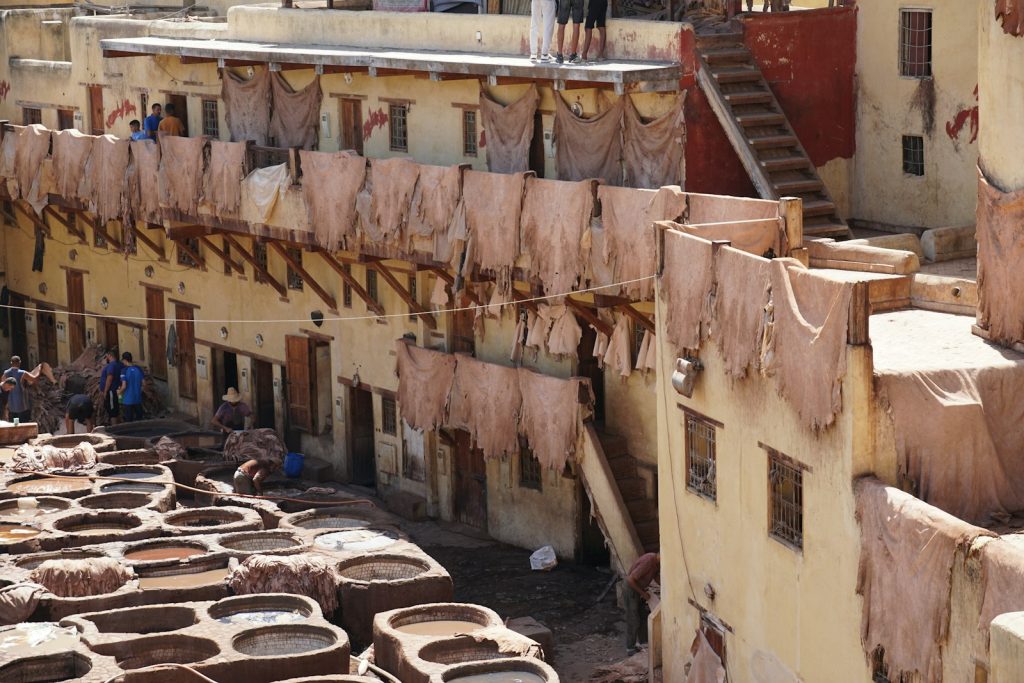
- Many Indonesian exporters buy raw salted skins from collectors and farms, then tan to crust or finished in Java.
- Some tanneries in Java exotic leather hubs specialize in one stage only (e.g. crust), others offer full finishing: aniline, semi‑aniline, nubuck, metallic, patent, embossed (still on real exotic hides), etc.
3. Export Consolidation
- Exporters consolidate orders by species, origin, grade, size and finish.
- CITES documentation is prepared for each species and source code in the shipment; in mixed consignments, every line must be clearly described.
- Final physical export typically leaves via Jakarta (CGK)
For B2B buyers, the key is to specify up front: species (with scientific name), finish, size band, grade, and intended destination country, so that exporters can assess both availability and permit requirements.
Grades, Measurements and Realistic Pricing Ranges
Unlike bovine, exotic reptile skins are sold by the piece (python, lizard) or by cm/inch of usable width for crocodilian panels. Below is a summary of how Indonesian exporters usually describe and price key items for 2025–2026.
- Measurement for python and lizard skins
- Typically measured by length in cm (from head cut to tail cut) and belly width at the widest point. Many buyers specify minimum usable length (e.g. > 240 cm).
- Grades for reptile skins
-
- Grade I / Selection: Clean belly, minimal scars or defects, suitable for visible panels on luxury goods.
- Grade II: Some natural markings or healed scars; often used for smaller leather goods or darker finishes.
- Grade III and below: More visible defects, often used for small parts, patchwork, or heavily corrected finishes.
- Indicative wholesale price ranges (last verified June 2026)
-
- Reticulated python crust (Grade I–II, 240–300 cm): Approx. USD 55–110 per skin, depending on size, grade, and source (wild vs farmed).
- Reticulated python finished (aniline/metallic/patent): Approx. USD 85–180 per skin.
- Water monitor lizard crust (medium sizes): Approx. USD 18–45 per skin, depending on size and selection.
- Water monitor finished: Approx. USD 30–80 per skin.
- Crocodylus porosus belly panels (farm, Grade I, watch‑strap cuts): Approx. USD 18–35 per cm of width for finished panels.
- New Guinea crocodile larger panels (bag grade): Wide range, approx. USD 400–1,400 per panel depending on size, grade and finish.
- Usual MOQs for export orders
-
- Python / lizard: Often from 50–100 skins per color/finish, with total shipment volumes from a few hundred up to several thousand skins.
- Crocodile panels: Often from 10–20 panels per color/size spec, higher for custom colors.
- Smaller ateliers may consolidate via aggregators or mixed‑lot orders to meet MOQs.
These ranges are indicative only and provided for planning purposes; actual quotes depend on current quotas, raw skin availability, finishing complexity, and order volume. Exotic Leather Wholesale always prices by quote with updated market data and CITES realities for the 2025–2026 seasons.
CITES and Legal Export from Indonesia
CITES (the Convention on International Trade in Endangered Species of Wild Fauna and Flora) underpins almost every commercial reptile leather export out of Indonesia. As a B2B buyer, understanding how CITES interacts with Indonesian law is non‑negotiable.
Key CITES Concepts for Indonesia’s Reptile Trade
- Appendix II listing: Species like Malayopython reticulatus, Varanus salvator, and Crocodylus porosus are in Appendix II in Indonesia. Trade is allowed but controlled via permits and quotas.
- Non‑detriment findings (NDFs): Indonesia’s Scientific Authority assesses whether export volumes are sustainable; this underpins national quotas.
- Source codes: Every CITES permit line must state the source (W, C, F, R, etc.), and some importing countries have stricter rules for certain source codes.
What a Legally Exported Shipment from Indonesia Requires
For a typical commercial export of reptile skins from Indonesia, you should expect at least:
- CITES Export Permit issued by Indonesia’s CITES Management Authority, listing:
- Exporter and importer details;
- Species with scientific names (e.g. Malayopython reticulatus);
- Source code (e.g. W, C, F);
- Quantity and unit (e.g. number of skins, m², panels);
- Purpose code (usually “T” for commercial trade).
- Export license and customs documentation under Indonesian law.
- Any required CITES import permit or pre‑import registration in the destination country (e.g. EU, UK, some Asian markets).
This overview is general information and not legal advice. Regulations can change, quotas can be revised mid‑year, and importing countries can add extra requirements. Before confirming an order, always coordinate with:
- Your CITES Management Authority in the destination country;
- Your customs broker or freight forwarder familiar with CITES goods;
- Your insurer, especially for high‑value crocodilian shipments.
If you need help translating design specs into CITES‑viable purchase orders, you can plan your trip through the sourcing process with us; we are comfortable coordinating via email or WhatsApp to align species, finishes and documentation pathways before you commit.
Why Java Exotic Leather Tanneries Matter
Although raw skins originate across Indonesia, the beating heart of the value chain is Java exotic leather finishing. Several factors make Java significant:
- Technical know‑how: Decades of experience with reptile tanning and finishing for export markets.
- Clustering: Concentrations of facilities allow:
- Cross‑tannery color matching;
- Splitting of large orders across multiple plants;
- Access to smaller specialized workshops for hand‑finishing.
- Logistics: Proximity to major ports and air cargo hubs simplifies time‑sensitive shipments, particularly for just‑in‑time fashion and watch‑industry orders.
Most international buyers never see the raw‑skin collection phase; they work with Java‑based exporters that present crust or finished skins to agreed specs. For due diligence, though, you should still ask for transparency on origin and source codes, plus assurance that CITES permits will correctly reflect those origins.
What Serious Wholesale Buyers Should Specify
To avoid misunderstandings on quality, compliance and price, professional buyers entering the Indonesia exotic leather industry should come prepared with precise technical briefs. At minimum:
1. Species and Legal Identity
- Always specify common and scientific name (e.g. “reticulated python – Malayopython reticulatus”).
- Confirm CITES Appendix and source code options available from the exporter.
- Ask whether the skins come from one origin region or mixed; some brands prefer traceable batches.
2. Technical Requirements
- For pythons: minimum length, minimum belly width, cut type (belly vs back‑cut), intended product (bag, shoe, SLG).
- For lizard: size range, pattern orientation, and whether you accept natural neck/leg defects in visible panels.
- For crocodile panels: usable width (in cm), panel type (full belly, side panels, strap panels), and maximum allowed defects per panel.
- Finishing: color reference (Pantone/RAL or physical swatch), sheen level (matte, semi‑matte, glossy), and any special effects (hand‑rubbed, metallic, pearl, patent).
3. Compliance and Documentation Expectations
- Ask the exporter to confirm they will apply for and provide CITES export permits for each species/source code.
- Check with your CITES Management Authority if you need an import permit or pre‑approval before shipment.
- Align on INCOTERMS (e.g. FOB, CIF) and who handles customs brokerage on each side.
For brands benchmarking themselves against established luxury houses, remember that those companies typically have dedicated compliance teams and standardized product specs. Smaller ateliers can still work at that level of discipline; it just requires documentation habits from day one.
Lead Times, Color Development and Sampling
Indonesia’s reptile leather capacity is significant, but true luxury‑grade material is finite and often tied to quota and farm cycles. Planning ahead reduces both cost and risk.
Typical Lead Time Ranges
- Sampling from existing colors: approx. 2–4 weeks, depending on complexity and courier times.
- Custom color development on existing leathers:
- Lab dips / strike‑offs: 2–3 weeks after agreed brief;
- Small batch production: additional 3–6 weeks.
- New seasonal orders with CITES export:
- Production: commonly 6–10 weeks from deposit and color confirmation;
- CITES export permitting: often 2–6 weeks, depending on authority workload and quota status.
These are indicative ranges based on recent trade flows rather than guaranteed timelines. CITES processing can take longer during peak periods or when quotas are close to exhaustion.
Sampling and Small‑Lot Strategies
New buyers in the Indonesia reptile leather export space often start with:
- Mixed‑selection sample lots of python or lizard across several grades/sizes to train internal pattern‑cutting and QC teams.
- Standard color cards (black, dark brown, navy, natural, common fashion colors) before attempting complex custom finishes.
- Parallel development of CITES, customs and internal compliance procedures so the first commercial shipment does not sit at the border.
You can plan your trip into sampling and first orders with our sourcing desk; we typically coordinate via email/WhatsApp to match MOQs, intended product and your existing compliance framework.
Risk Management: What Can Go Wrong and How to Reduce It
Exotic leather is a regulated, non‑fungible raw material. Missteps cost both time and credibility.
Regulatory and Documentation Risks
- Incorrect species or source codes on permits: Can result in shipment delays, fines or seizure.
- Missing or invalid CITES permits: Authorities in some jurisdictions have no flexibility; goods may be confiscated.
- Misdeclaration of origin or quantity: Damages your company’s risk profile with customs and may impact future imports.
Commercial and Quality Risks
- Over‑optimistic grading expectations: Reptile skins are never perfectly uniform; agreeing realistic defect thresholds is crucial.
- Pattern yield issues: Bag and shoe patterns developed on bovine often do not translate directly to python or crocodile.
- Color mismatch: Screen‑based approvals almost always diverge from real‑world color; physical swatches are safer.
Practical mitigations include:
- Working with exporters that provide clear grading definitions and agreed inspection points;
- Investing in in‑house or partner expertise on exotic pattern engineering;
- Using experienced customs brokers who routinely handle CITES consignments.
How Exotic Leather Wholesale Fits Into the Picture
Exotic Leather Wholesale is a sourcing desk, not a tannery. Our role in the indonesia exotic leather industry is to help B2B buyers align real‑world Indonesian supply with their product, compliance and budget constraints. In practice, that includes:
- Species and finish matching: Translating design concepts into viable species/finish/grade combinations available from Indonesian tanneries.
- Market‑realistic pricing: Providing by‑quote ranges grounded in current Indonesian raw material costs and export demand, instead of static price lists.
- CITES‑aware sourcing plans: Structuring orders so that exporters can realistically obtain the right permits within expected timeframes (while you still confirm details with your own authorities).
No one can pay to change what we publish; if you proceed with our partner they may pay us a referral fee at no extra cost to you. For a detailed RFQ or sample brief, you can plan your trip through our sourcing desk and continue the conversation via email or WhatsApp.
FAQs: Indonesia’s Exotic Leather Industry
Is it legal to import Indonesian python or crocodile leather into my country?
It can be legal if the species are correctly documented, CITES permits are in place, and your country allows commercial imports of that species and source code. Rules differ by jurisdiction, so you must confirm with your national CITES Management Authority and your customs broker before ordering.
Do Indonesian exporters provide CITES permits automatically?
Serious exporters will apply for CITES export permits as part of the shipping process, but you should always confirm in writing which party is responsible for obtaining permits. Some countries also require you, as the importer, to obtain a CITES import permit in advance.
What is the minimum order quantity for Indonesia reptile leather export?
Typical export MOQs from Indonesian tanneries are around 50–100 python or lizard skins per color/finish and 10–20 crocodile panels per color/size spec. Smaller brands may aggregate orders or work with mixed lots to reach MOQs.
How are grades defined for Indonesia python and lizard skins?
Grades are usually based on belly cleanliness and defect visibility. Grade I (or Selection) has minimal defects and is suitable for visible panels; Grade II has more natural markings or scars; lower grades are used for smaller cuts or more covering finishes. Always request the seller’s written grading definitions before purchase.
Can I get fully traceable exotic leather from Indonesia?
Some farms and tanneries offer enhanced traceability on specific lines, especially for crocodilians, but full farm‑to‑product traceability is still the exception rather than the rule. If traceability is critical, raise it at the RFQ stage so supply options can be assessed realistically.