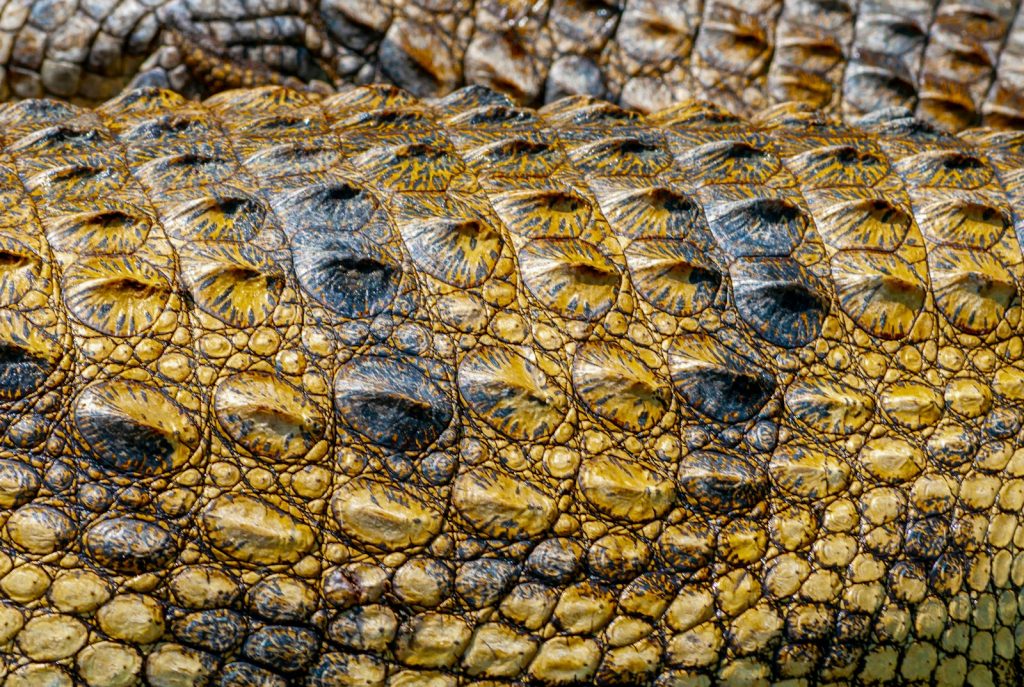
Honest sourcing note: We name every species accurately — saltwater crocodile (Crocodylus porosus), Nile crocodile (C. niloticus), American alligator (Alligator mississippiensis), caiman, reticulated python, monitor/ring lizard, ostrich and stingray — and never sell embossed calf as “exotic”. Most exotic leather is CITES-regulated (commonly Appendix II); legal cross-border trade needs export/import permits and source codes, and buyers are responsible for their country’s rules — this is general information, not legal advice; verify with your CITES Management Authority and customs broker. Prices, MOQ and lead times are indicative ranges (2025–2026), by quote. Luxury houses are referenced only as neutral examples — no affiliation. We are a B2B sourcing desk, not a tannery: we coordinate vetted, CITES-compliant suppliers.
How to store exotic leather skins starts with controlling humidity, temperature, and handling so the fibres don’t dry, curl or grow mould. For B2B buyers, correct storage protects your investment through production cycles, shipping delays and seasonal buying.
At Exotic Leather Wholesale, we sit between Indonesian tanneries and global ateliers, so we see the whole storage chain: raw to wet-blue to crust to finished skins, in tropical tanneries and in temperate workshops. This guide sets out practical standards for how to store exotic leather skins by type and stage, what can safely wait six months, and what should be cut and used quickly.
We’ll focus on:
– Salted/raw vs wet-blue vs crust vs finished skins
– Crocodile/alligator (Crocodylia), lizard (Varanidae), snake (Pythonidae), stingray (Dasyatidae) and farmed mammal (Capra/Ovis/Bos)
– Typical B2B humidity/temperature ranges
– Packing, racking, and how long you can hold inventory without losing value
All ranges are indicative, based on trade practice and data we cross-check with Indonesian partners and EU tanners (verified through June 2026). This is operational guidance, not legal advice; for CITES obligations, always confirm with your local Management Authority.
—
1. The basics: conditions for safe exotic skin storage
For most finished and crust exotic skins, think of a cool, dry stock room:
– Temperature: 18–24°C (64–75°F) stable, no direct heat sources
– Exotic skin storage humidity: 45–60% RH (relative humidity), unfluctuating
– Light: Dark or low light; avoid UV and direct sunlight
– Air: Clean, lightly ventilated, no condensation, no chemical fumes
Below ~40% RH, many thin exotics start to dry, curl, or crack at the fold lines. Above ~65–70% RH and with poor airflow, mould becomes your main risk, especially on vegetable-tanned crust leather.
The exact tolerance depends strongly on:
– Tannage (chrome, chrome-free, veg, combination)
– Finish (aniline, semi-aniline, pigmented, nubuck)
– Stage (raw, wet-blue, crust, finished)
– Species and thickness
Tanneries in Java often work in ambient tropical humidity and temperature, but they move material through quickly. Your stock room is different: skins may sit for months across design and sampling cycles. Aim for consistency more than perfection; large swings in humidity or temperature age skins faster than a stable-but-not-ideal environment.
—
2. Storage by processing stage: raw to finished
The way you handle skins depends first on which stage of the tanning process you are storing.
2.1 Raw/salted exotic skins
Trade examples:
– Salted crocodile flanks/backstraps (Crocodylus spp.)
– Salted python (Python reticulatus, Python bivittatus)
– Salted lizard (Varanus salvator and other Varanus spp.)
Risk profile: High. Bacterial activity and insect activity are your main enemies, plus salt deliquescence in humid climates.
Storage guidelines:
– Temperature: Ideally below 10°C (50°F) in cold storage if holding more than a few weeks
– Humidity: Keep ambient below 60% RH; high humidity dissolves surface salt and promotes rot
– Packing: Stacked flesh-to-flesh or flesh-to-salt with adequate salt between layers
– Time horizon:
– Short-term (under 4–6 weeks at room temp, low humidity) is common in source countries.
– Long-term storage belongs in refrigerated containers or cold rooms.
Most fashion buyers do not hold raw exotics. They buy at wet-blue, crust, or finished; raw-salted risk and CITES export complexity are typically left with the tannery or upstream processor.
2.2 Wet-blue and pickled exotic skins
Trade examples:
– Wet-blue crocodile or alligator (chrome-tanned intermediate)
– Pickled snake skins in acid-salt liquor
Risk profile: Moderate. High moisture content means mould and bacterial damage if temperature/humidity rise or drums/containers are not properly sealed.
Storage guidelines:
– Usually stored in drums or sealed containers with liquor by the tannery, not at the atelier.
– Temperature: Cool storage preferred; under ~15°C (59°F) is common practice where infrastructure allows.
– Handling in B2B: If you are buying wet-blue exotics (e.g., for your own finishing), arrange logistics so skins go straight from tannery to your wet processing facility. Do not leave wet-blue in uncooled warehouses.
For most brands and workshops, the practical answer is: don’t store wet-blue exotics; store crust or finished instead.
2.3 Storing crust leather (dry tanned, unfinished)
Crust is fully tanned and dried, often with preliminary dyeing, but not yet finished (no final topcoats, plating, or feel-adjusting processes).
Trade examples:
– Full crust crocodile, semi-bleached, for later custom finishing
– Dyed crust python awaiting specific top coat or emboss
– Goat/sheep crust lining leather
Risk profile: Higher than finished, lower than raw. Crust is dry and stable but more vulnerable to humidity swings, mould (especially on veg/combination tannage), and oxidation.
Storage guidelines for storing crust leather:
– Humidity: 45–55% RH. Above ~60% RH for extended periods can lead to mould growth, especially if skins are stacked tightly without air gaps.
– Temperature: 18–22°C is ideal; avoid hot roofs or metal containers that spike daily.
– Airflow: Light airflow; avoid sealed plastic over long periods because trapped moisture encourages mould.
– Packing:
– Wrap in breathable paper (acid-free Kraft or tissue) rather than plastic for long-term storage.
– Stack flat on shelves or pallets; avoid over-compression that sets creases.
– Time horizon:
– 6–18 months is common in the trade without visible degradation if conditions are stable.
– Beyond that, plan for reconditioning (light rehydration, staking) before finishing.
Java tanneries shipping crust to France/Italy/Singapore often build this into schedules: buyers place seasonal crust orders, then finish closer to the market. Storage discipline matters because any mould or stain in crust telegraphs through to the finished surface.
2.4 Finished exotic leather skins
Finished skins carry their final colour and topcoat, ready for cutting.
Trade examples:
– Glazed belly crocodile (Crocodylus siamensis, C. porosus, C. niloticus)
– Matte or semi-matte crocodile
– Ring lizard (Varanus salvator) glazed or matte
– Python belly/back cut, glazed, nubuck, or semi-matte
– Shagreen (stingray, Dasyatidae) polished or matte
– Goat/sheep/bovine exotics-inspired finishes (but clearly labelled as such)
Risk profile: Lowest, but not zero. Risks: UV fading, drying, finish sticking/blocking, deformation, and mould in high humidity.
Storage guidelines:
– Humidity: 45–60% RH. Short spikes won’t kill the skin; chronic high humidity will.
– Temperature: 18–24°C; avoid heat sources (radiators, heaters, hot shipping containers).
– Light: Keep away from windows and strong artificial light; some aniline and light colours fade measurably over a year.
– Packing:
– Large skins: stored flat, lightly stacked, with protective interleaving paper.
– Smaller exotics (lizard, python, stingray): can be rolled loosely scale-out, not tight, and stored in cartons.
– Time horizon:
– 12–36 months in good conditions is normal.
– Very high-end maisons often cycle exotics faster (under 18 months) to keep colours and finishes in top condition.
—
3. Species-specific storage considerations
Different species react differently to the same room conditions, especially on thin, scaled skins.
| Species / Type | Typical Thickness (finished) | Key Storage Sensitivities | Practical Notes |
|---|---|---|---|
| Crocodile / Alligator Crocodylus spp., Alligator mississippiensis |
0.6–1.6 mm | Glaze cracking if folded; humidity-driven mould on flesh; UV fading on aniline | Store flat; avoid tight bends across the belly; support by paper when lifting large skins. |
| Lizard Varanus spp. |
0.4–0.8 mm | Edge curling at low RH; scale lift on overdry skins | Keep humidity stable; store in envelopes or flat folders to protect thin tips. |
| Python / Snake Python reticulatus, P. bivittatus & others |
0.4–1.0 mm | Curling and twisting if dried too fast or stored too dry; scale lift on unfinished/nubuck | Roll loosely scale-out; avoid tight rubber bands; never hang from one end. |
| Stingray / Shagreen Dasyatidae spp. |
1.0–2.5 mm | Stiff; resistant to surface scratching but prone to cracking if forced over sharp radii | Store flat; don’t stack heavy loads on top; avoid extreme cold that makes it more brittle. |
| Goat / Sheep / Bovine exotics-programme | 0.8–1.8 mm | More forgiving; standard high-end leather storage rules | Segregate clearly from true exotics; accurate labelling by species and origin. |
Two recurring issues we see in workshops:
1. Curling python and lizard tips – almost always linked to over-dry rooms, dehumidifiers running constantly, or storage near hot air outlets. A small bump in RH back toward 50–55% and short reconditioning usually helps.
2. Glaze fractures on crocodile bellies – caused by folding or rolling too tightly, especially across the widest part. Once cracked, that mirror finish is gone; prevention is the only strategy.
—
4. How long can you store skins before quality or grading is affected?
The trade prices exotic skins on three big levers:
– Species and size
– Grade (I/II/III etc., based on defect tolerance)
– Finish, colour, and fashion relevance
Storage primarily threatens grade and, secondarily, colour relevance.
Indicatively (last verified June 2026, always by-quote):
– Finished crocodile belly, Grade I–II, 30–39 cm from established tanneries may trade in the broad band of USD ~550–900/skin EXW, depending on origin, finish, and colour run size.
– Finished python, mid-sizes, A/B grade might sit around USD ~25–70/skin EXW depending on pattern, finish, and yield.
– Finished lizard, ring pattern, good belly width typically lands somewhere in the USD ~40–120/skin EXW range, depending heavily on grade and finish.
If storage damage introduces visible mould scars, crease lines, or glaze fractures in the main cutting area, a Grade I skin is suddenly Grade II or III—or rejected. That is a material write-down at B2B pricing.
Typical safe holding windows (under good storage):
– Finished crocodile/alligator: 1–3 years
– Finished lizard and python: 1–2 years
– Stingray: 2–4 years (very stable, but finishing fashion cycles still apply)
– Crust (all species): 6–18 months before some reconditioning is advisable
Fashion risk often dominates physical risk. A niche seasonal colour can be “over” after one year regardless of perfect storage, while classic blacks, dark browns, and navies remain saleable much longer.
If you’re planning significant inventory (e.g., for a small leathergoods line or multi-year capsule collections), we can help structure orders and storage so you’re not sitting on sensitive surplus. You can plan your trip through the sourcing calendar with us via email or WhatsApp and match tannery lead times to your design cycle.
—
5. Practical storage setup for ateliers and brands
You don’t need a laboratory; you need system and discipline. For most small to mid-sized buyers, a dedicated exotic stock room with the following is sufficient:
5.1 Environment control
– Thermometer + hygrometer: Simple digital units with memory for min/max give you a reality check.
– Dehumidifier or humidifier as needed:
– In tropical climates, you may need a dehumidifier to keep RH under 65%.
– In cold/dry climates with strong heating, a humidifier might be useful to keep RH from dropping below 40%.
– Insulation from swings: Avoid metal shipping containers as storage; avoid roof spaces that overheat by day and cool rapidly at night.
5.2 Racking, boxing, and labelling
– Shelving: Flat metal or sealed wood shelves; keep skins off the floor.
– Cartons / folders: Neutral pH boxes or folders for small, thin skins; avoid flimsy cartons that collapse under weight.
– Interleaving: Use clean, non-printed paper between skins to prevent colour transfer and finish abrasion.
– Labelling:
– Species (common + scientific name)
– Tannage (chrome/veg/combo; crust/finished)
– Grade and size class (e.g., croc belly 34–36 cm, Grade I–II)
– CITES appendix and source code if applicable (e.g., Appendix II, source C or F)
– Supplier batch/lot number and delivery date
Accurate labelling helps you implement FIFO (first in, first out) so older batches are used first, particularly for seasonal colours and crust.
5.3 Handling and inspection
– Support large skins with two hands or a board to avoid stretching the belly.
– Don’t fold across the main cutting area; if you must fold, do it outside the high-value central panel.
– Conduct a quarterly visual check: open several bundles, check for any mould spots, musty smell, or unusual stiffness.
If you find early mould on crust or finished skins, removing them from the pack, drying them in a controlled low-humidity room, and consulting the supplying tannery about safe cleaning methods is essential. Avoid aggressive household cleaners; some finishes are easily stripped.
—
6. CITES and storage: paperwork, traceability, and audits
For CITES-listed species (many crocodilians, most pythons, some lizards, some rays), storage is not only a physical issue but a compliance and traceability issue.
Key points for B2B buyers:
– CITES Appendix & source: Know whether the species is Appendix I or II (most trade exotics are Appendix II, e.g., many farmed crocodiles and pythons), and the source code (W, R, C, F, D etc.). These appear on CITES export/import documents, not on the skin itself.
– Document retention: Keep copies of CITES permits, invoices, and packing lists tied to batches in your storage records.
– Internal stock records: Track incoming quantities, outgoing usage, and remaining stock by batch number so audits can reconcile documents with physical skins.
Storage itself doesn’t trigger CITES requirements, but movement across borders does. This article is general information, not legal advice; always verify requirements with your national CITES Management Authority or a qualified customs broker before import/export.
Our role as a sourcing desk is to help you:
– Select species and origins that fit your design and compliance risk tolerance
– Coordinate with Indonesian and partner tanneries on documentation and marking
– Ship from tannery to your nominated port or warehouse with clear traceability
If you’re planning multi-country production (e.g., tanning in Indonesia, cutting in Italy, assembly in another EU state), talk to us early via plan your trip so we can align paperwork and logistics; WhatsApp coordination often helps keep multi-leg shipments on track.
—
7. How Exotic Leather Wholesale supports smart storage strategies
Because we operate as an honest B2B sourcing desk, not a single tannery, we see a wide range of storage practices across:
– Indonesian crocodile, python, lizard, and stingray processors
– Finishing specialists in Java and other hubs
– European and Asian brands and ateliers working from a few skins per season up to large regular programmes
That vantage point lets us help you:
– Decide which stage to buy in (crust vs finished) based on your facility and climate
– Set realistic MOQ and lead time expectations so you don’t overstock sensitive inventory
– Benchmark indicative price ranges (2025–2026, always by quote) so you trade quality for the right application instead of over-specifying for low-risk uses
Typical patterns we see:
– Small ateliers working in variable climates benefit from buying more finished and fewer crust lots to reduce storage risk.
– Brands with established finishing partners sometimes buy crust exotics in Java then finish closer to their main production cluster; storage planning becomes part of program design.
– High-value, low-volume items (e.g., Grade I large belly crocodiles for watchstraps or small leathergoods) are stored with extra care—separate racks, individual sleeves, tighter environment control—because each skin carries significant unit value.
We work strictly by-quote and case-by-case, grounded in actual availability on the ground. No one can pay to change what we publish; if you proceed with our partner they may pay us a referral fee at no extra cost to you.
If you’d like help matching species, grade, finish, and storage strategy to your production plan, you can send a sourcing enquiry or RFQ via plan your trip; we also coordinate efficiently over WhatsApp for samples and follow-up questions.
—
FAQs: How to store exotic leather skins
Can I store exotic leather skins in plastic bags?
Short term during transit, yes; long term, it is risky. Sealed plastic traps moisture and can encourage mould, especially on crust leather. For storage beyond a few weeks, use breathable paper wrapping and cartons in a controlled room, keeping plastic only as a dust cover with some air circulation.
Is air conditioning enough to control exotic skin storage humidity?
Sometimes, but not always. Air conditioning reduces temperature and often lowers humidity, but in very humid or very dry climates it may not keep RH in the 45–60% range on its own. Monitor with a hygrometer; add a dehumidifier or humidifier if you see prolonged readings outside that band.
How should I store python skins: flat or rolled?
For most ateliers, loosely rolled storage is practical and safe. Roll scale-out, starting from the tail toward the head, without tight tension, and keep rolls in boxes away from heat sources. Avoid tight bands or folds that can permanently crease or twist the skin.
How do I prevent mould on crust exotic leather?
Keep humidity below about 60% RH, allow light air circulation, and avoid sealed plastic. Store crust wrapped in paper and stacked loosely, inspect quarterly, and separate any suspicious-smelling or spotted skins immediately. If mould appears, consult the supplying tannery for appropriate cleaning before using chemicals.
Can old exotic leather skins still be used if stored correctly?
Yes, many well-stored finished exotics remain usable for several years, especially classic colours. Check for dryness, cracking at folds, mould, and finish integrity. Some older skins may benefit from light conditioning or rehydration by an experienced finisher before cutting, but if physical damage is minimal, they can still produce high-quality items.